
A pituitary tumour diagnosis can raise several concerns for patients and their families, particularly when surgery is recommended. Along with understanding treatment options, patients often want to know how much the procedure will cost, what is included in the hospital bill, and whether additional expenses may arise during recovery.
India has become an important destination for patients seeking advanced neurosurgical treatment, experienced specialists, modern hospital facilities, and comparatively affordable healthcare. The pituitary tumour surgery cost in India depends on several factors, including the tumour’s size and location, surgical technique, hospital infrastructure, surgeon’s experience, diagnostic investigations, and length of hospital stay.
Pituitary tumours are commonly benign growths that develop in the pituitary gland, a small hormone-producing gland located at the base of the brain. Although many pituitary tumours grow slowly, some can affect hormone production, vision, and surrounding brain structures. Depending on the diagnosis, treatment may involve monitoring, medication, surgery, radiation therapy, or a combination of approaches.
This comprehensive guide explains different types of pituitary tumour surgery, estimated treatment expenses, factors affecting the overall price, hospital package inclusions, additional costs, recovery expenses, and how international patients can plan their treatment in India.
1. What Is Pituitary Tumour Surgery?
Pituitary tumour surgery is a neurosurgical procedure performed to remove or reduce an abnormal growth in the pituitary gland. The primary objective is to remove as much of the tumour as safely possible while protecting surrounding brain structures, blood vessels, and normal pituitary function.
Most pituitary tumours are called pituitary adenomas. They are generally non-cancerous, although their effects can be significant depending on their size and hormone activity.
Surgery may be recommended when:
- A tumour presses against the optic nerves or causes vision problems.
- The tumour produces excessive hormones that cannot be adequately controlled with medication.
- The tumour continues to grow.
- There is pressure on nearby brain structures.
- The patient develops symptoms such as persistent headaches or hormonal disturbances.
- A pituitary tumour causes sudden complications, such as bleeding within the tumour (pituitary apoplexy).
Not every pituitary tumour requires surgery. Some small, non-functioning tumours can be monitored, while certain hormone-producing tumours, particularly prolactinomas, may respond well to medication.
The treatment decision depends on the tumour type, hormone levels, imaging findings, symptoms, and the patient’s overall health.
2. What Is the Average Pituitary Tumour Surgery Cost in India?
The pituitary tumour surgery cost in India varies according to the complexity of the procedure and the medical facilities required.
For initial financial planning, patients may encounter broad indicative estimates ranging from approximately ₹2,00,000 to ₹7,00,000 or more for surgery. Complex cases, extended ICU care, advanced investigations, or additional procedures may increase the overall expense.
These figures are general planning estimates, not verified hospital quotations or guaranteed package prices. The actual cost should be confirmed after reviewing the patient’s MRI scans, medical reports, hormonal investigations, and treatment requirements.
Estimated Cost Breakdown
| Treatment or Expense | Indicative Cost in India |
| Basic pituitary tumour surgery | ₹2,00,000–₹4,00,000 |
| Endoscopic pituitary surgery | ₹2,50,000–₹5,50,000 |
| Complex pituitary tumour surgery | ₹4,00,000–₹7,00,000+ |
| Pre-operative investigations | ₹15,000–₹50,000 |
| Specialist consultations | ₹1,000–₹5,000 per consultation |
| Additional ICU care | Depends on hospital and duration |
| Post-operative hormonal assessment | Depends on investigations required |
Note: These are broad indicative estimates for budgeting purposes. Individual hospital charges, room categories, medical complexity, and treatment requirements can differ substantially. Some expenses may already be included in a surgical package.
3. Different Types of Pituitary Tumour Surgery and Their Costs
The surgical approach is one of the most important factors affecting overall treatment expenses. Neurosurgeons select the procedure according to tumour size, location, extension, and relationship with nearby nerves and blood vessels.
A. Endoscopic Transsphenoidal Surgery
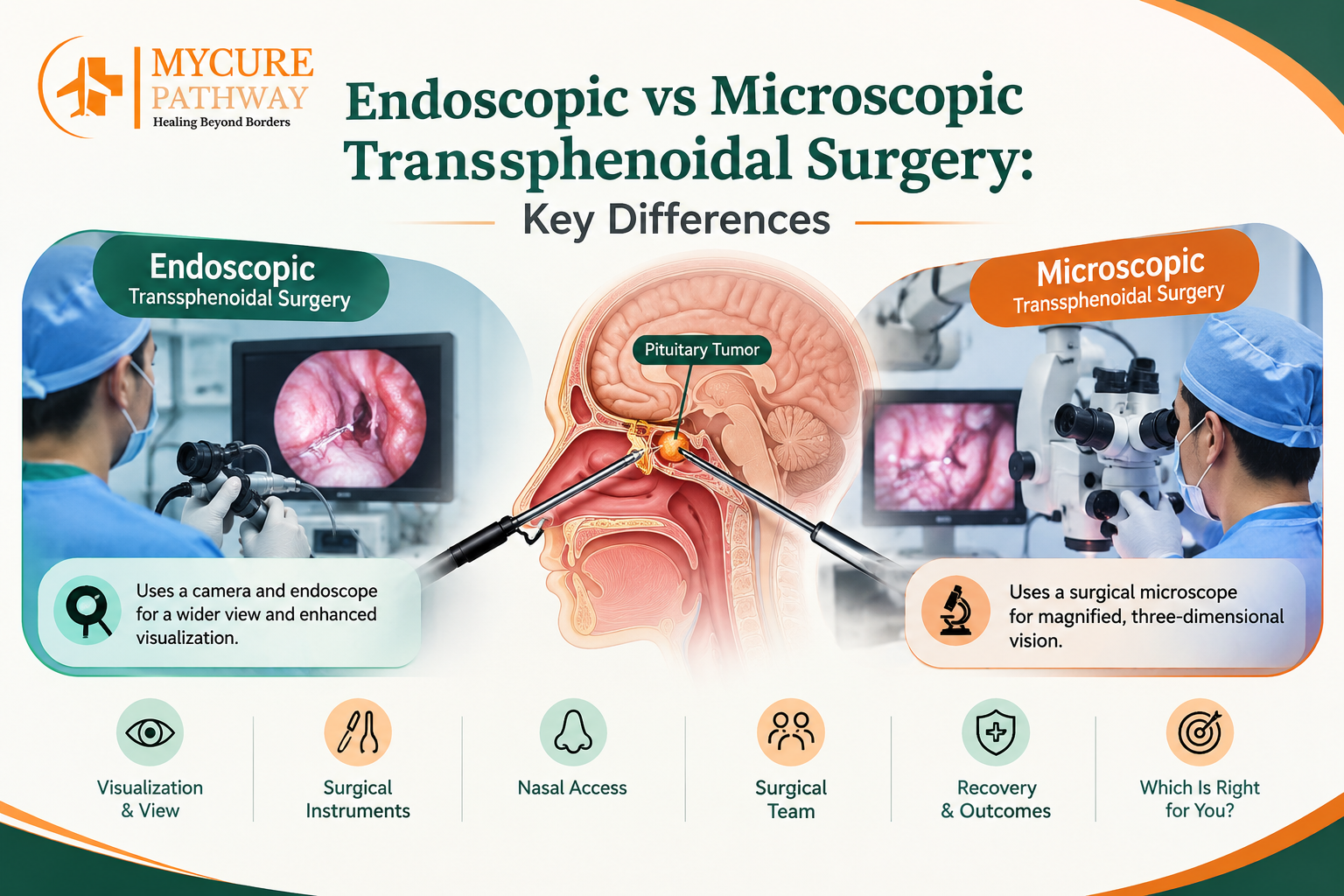
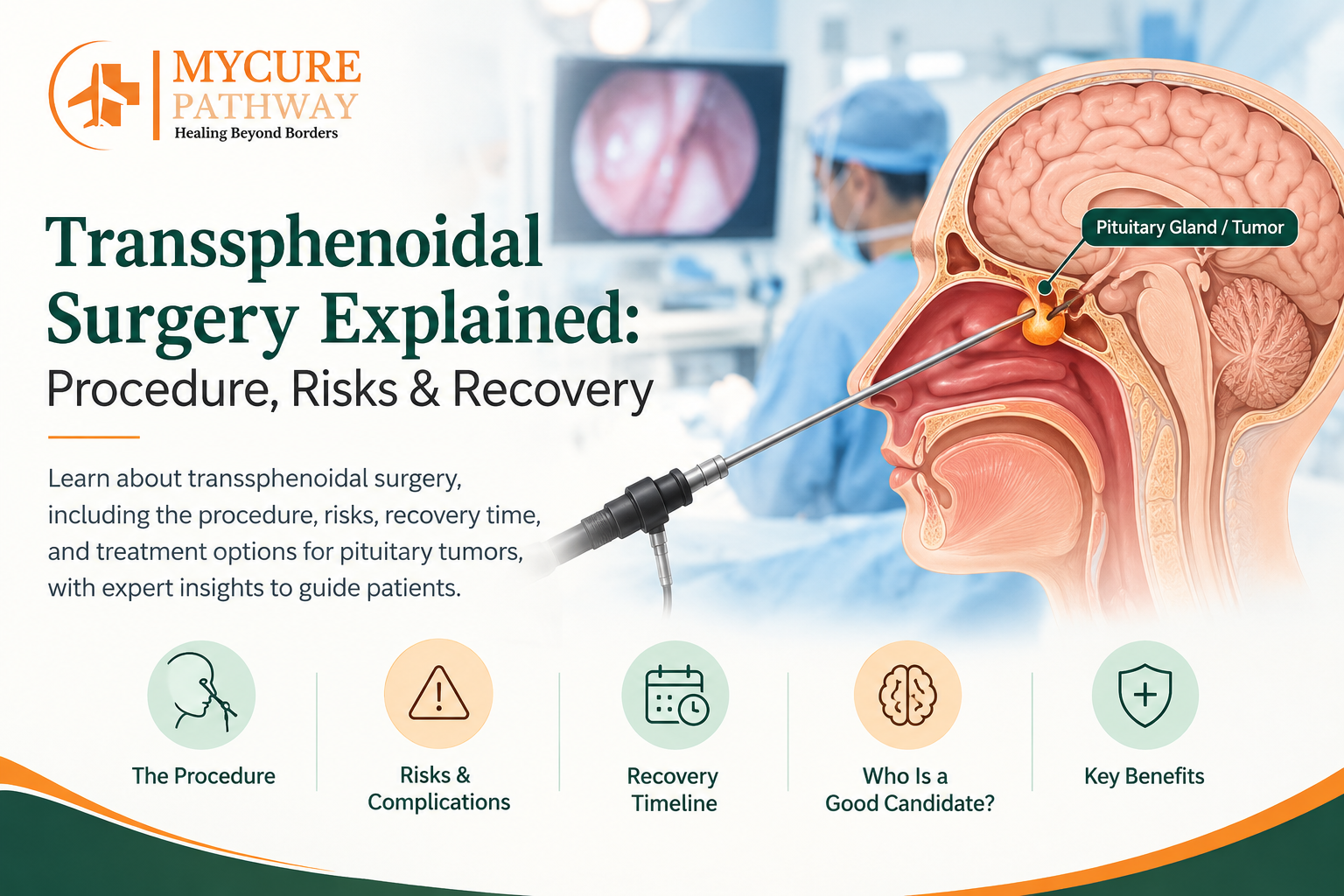
Endoscopic transsphenoidal surgery is one of the commonly used approaches for removing pituitary tumours. The surgeon reaches the pituitary gland through the nasal passage using a thin endoscope equipped with a camera and light.
The procedure does not usually require an external incision on the skull.
Advantages include:
- Minimally invasive surgical approach.
- No large external skull incision.
- Magnified visualisation of the surgical area.
- Less disruption to surrounding tissues compared with an open approach.
- Potentially shorter recovery for suitable patients.
Endoscopic pituitary surgery price: The cost may vary depending on the hospital, surgeon, endoscopic equipment, tumour complexity, and postoperative care. Published hospital estimates range from approximately ₹1.5 lakh to ₹5.5 lakh, although individual quotations may be higher.
B. Microscopic Transsphenoidal Surgery
Microscopic transsphenoidal surgery uses a surgical microscope to provide magnified visualisation while the surgeon accesses the pituitary gland through the nasal passage or an incision beneath the upper lip, depending on the technique.
It is an established approach for selected pituitary adenomas.
Advantages include:
- Magnified surgical visualisation.
- Established surgical technique.
- Suitable for certain pituitary tumour locations.
- No large opening through the skull.
The cost depends on the surgical setup, hospital charges, surgeon’s fees, and complexity of tumour removal.
C. Transcranial Surgery (Craniotomy)
In selected complex cases, the neurosurgeon may recommend a transcranial approach, also known as craniotomy.
This procedure involves temporarily opening part of the skull to access a tumour that cannot be safely reached through the nasal route.
It may be considered when:
- The tumour has extensive growth into surrounding structures.
- Its shape or location makes the transsphenoidal approach unsuitable.
- There is significant lateral extension.
- A complex or recurrent tumour requires a different surgical approach.
Craniotomy generally involves greater surgical complexity, potentially longer hospitalisation, and additional postoperative monitoring. Consequently, the overall treatment cost can be higher.
D. Revision Pituitary Tumour Surgery
Some patients may require another operation if the tumour was not completely removed during the first procedure or if it grows again.
Revision surgery can be more complicated because of scar tissue, altered anatomy, and changes to the surrounding structures.
The pituitary adenoma surgery cost for revision procedures may be higher due to:
- Additional imaging and diagnostic tests.
- More complex surgical planning.
- Longer operating time.
- Advanced surgical equipment.
- Greater postoperative monitoring requirements.
The neurosurgeon must carefully assess whether another operation, radiation therapy, medication, or observation is the most appropriate option.
4. Major Factors That Affect Pituitary Tumour Surgery Cost in India
The total expense of pituitary tumour treatment is not determined by the surgical procedure alone. Several clinical and hospital-related factors influence the final quotation.
1. Size of the Pituitary Tumour
Tumour size is an important factor in surgical planning.
Pituitary tumours are generally classified into:
- Microadenomas: Tumours smaller than 10 mm.
- Macroadenomas: Tumours measuring 10 mm or larger.
- Giant adenomas: Very large tumours, commonly described as measuring 40 mm or more.
Larger tumours may require more extensive surgical work, additional imaging, and longer postoperative observation. However, size alone does not determine complexity; tumour location and extension are equally important.
2. Tumour Location and Extension
A pituitary tumour may grow upwards towards the optic chiasm, extend sideways towards the cavernous sinus, or involve nearby structures.
Tumours extending into surrounding areas may require advanced surgical planning and specialised skull-base expertise.
For example, a tumour that extends into the cavernous sinus may be difficult to remove completely without risking damage to nearby nerves and blood vessels.
This can increase the duration and complexity of surgery.
3. Type of Pituitary Tumour
Different pituitary tumours produce different hormones or may not produce any clinically significant excess hormone.
Common types include:
| Tumour Type | Hormone or Clinical Effect |
| Prolactinoma | Produces excess prolactin |
| Somatotroph adenoma | Produces excess growth hormone |
| Corticotroph adenoma | Produces excess ACTH |
| Thyrotroph adenoma | Produces excess TSH |
| Non-functioning adenoma | Does not cause clinically significant hormone overproduction |
The tumour type influences treatment planning, diagnostic investigations, medication requirements, and postoperative monitoring.
For example, prolactinomas are often treated initially with medication rather than surgery. Surgery may be considered when medication is ineffective, unsuitable, or complications arise.
4. Experience of the Neurosurgeon
The expertise of the treating surgeon is another important consideration.
A neurosurgeon experienced in pituitary and skull-base surgery may be better equipped to assess complex tumour anatomy and select an appropriate surgical approach.
Patients should consider:
- Experience in pituitary tumour operations.
- Expertise in endoscopic skull-base surgery.
- Experience with complex and recurrent adenomas.
- Hospital surgical infrastructure.
- Availability of endocrinologists and ENT specialists.
- Postoperative complication management facilities.
Choosing the best neurosurgeon for pituitary tumour treatment should involve evaluating qualifications, relevant surgical experience, hospital support, and the proposed treatment plan rather than relying only on online rankings.
5. Hospital Infrastructure and Technology
The hospital selected for treatment can significantly influence the overall cost.
Hospitals equipped with advanced neurosurgical facilities may offer:
- High-definition endoscopic systems.
- Advanced operating microscopes.
- Neuronavigation systems.
- Intraoperative imaging, where indicated.
- Dedicated neuro-ICU facilities.
- Advanced anaesthesia monitoring.
- Endocrinology and neuro-ophthalmology support.
These facilities can improve surgical planning and patient monitoring, although the use of specific technologies depends on individual clinical requirements.
6. Length of Hospital Stay
Patients undergoing uncomplicated pituitary surgery may require a relatively short hospital stay.
However, patients with complex tumours or postoperative complications may need longer hospitalisation.
Additional hospital days can increase:
- Room charges.
- Nursing expenses.
- Medication costs.
- Laboratory investigations.
- ICU charges.
- Specialist consultation fees.
7. Additional Medical Conditions
A patient’s overall health also influences surgical planning and expenses.
Conditions such as diabetes, hypertension, heart disease, respiratory disorders, and pre-existing hormonal deficiencies may require additional assessment and medical management.
Patients with multiple health conditions may need more extensive pre-operative evaluation and postoperative observation.
5. Pre-Surgery Tests Required for Pituitary Tumour Surgery
Before surgery, doctors conduct several investigations to understand the tumour’s size, hormonal activity, and relationship with surrounding structures.
These investigations help determine whether surgery is necessary and which surgical approach is appropriate.
| Diagnostic Test | Purpose |
| MRI of the pituitary gland | Determines tumour size, location, and extension |
| CT scan | Provides additional anatomical information when required |
| Serum prolactin | Checks prolactin hormone levels |
| Growth hormone and IGF-1 | Evaluates excess growth hormone production |
| ACTH and cortisol | Assesses adrenal hormone activity |
| TSH and free T4 | Evaluates thyroid function |
| LH and FSH | Assesses reproductive hormone function |
| Visual field testing | Checks whether the tumour affects vision |
| Complete blood count | Evaluates general health before surgery |
| Kidney and liver function tests | Helps assess fitness for surgery |
| Electrolyte assessment | Evaluates sodium and other electrolyte levels |
Not every patient needs every investigation. The endocrinologist and neurosurgeon determine which tests are necessary based on the patient’s symptoms and medical history.
Important: Patients should share previous MRI scans, pathology reports, hormone test results, and medication records with the treating team. This can help avoid unnecessary repeat investigations.
6. What Is Included in Neurosurgery Packages in India?
Many hospitals offer neurosurgery packages in India for domestic and international patients. However, the package inclusions differ between hospitals.
A basic surgical package may cover the main hospital admission and operation, while some advanced services may be charged separately.
Common Package Inclusions
- Neurosurgeon consultation.
- Pre-operative assessment.
- Standard anaesthesia charges.
- Operation theatre charges.
- Surgical procedure charges.
- Standard hospital room accommodation.
- Routine nursing services.
- Basic post-operative monitoring.
- Discharge summary.
Expenses That May Be Charged Separately
- Advanced MRI or CT investigations.
- Specialised hormonal tests.
- Additional ICU days.
- Extended hospitalisation.
- Blood products, if required.
- Additional surgical reconstruction materials.
- Treatment of complications.
- Long-term hormonal medications.
- Follow-up consultations after discharge.
- Radiation therapy, if subsequently recommended.
Questions to Ask Before Accepting a Hospital Package
Before confirming a hospital package, patients should ask:
- Does the package include the neurosurgeon’s professional fee?
- Is the endoscopic equipment included?
- How many hospital days are covered?
- Are ICU charges included?
- Are pre-operative MRI and hormonal investigations included?
- Are medicines and consumables covered?
- What happens if additional hospitalisation is required?
- Are postoperative consultations included?
- Will additional charges apply if the surgical approach changes?
- Is the package valid for the patient’s specific diagnosis?
A written, itemised quotation is preferable to a general cost estimate because it helps patients understand the actual financial commitment.
7. How to Choose the Best Neurosurgeon for Pituitary Tumour Treatment in India
Selecting an experienced neurosurgeon is one of the most important decisions when planning pituitary tumour surgery.
Pituitary surgery involves delicate anatomical structures, including the optic nerves, hypothalamus, cavernous sinus, and major blood vessels.
Patients should consider the following factors when choosing a specialist.
Relevant qualifications and experience: Look for a qualified neurosurgeon with experience in treating pituitary adenomas and skull-base tumours.
Endoscopic surgical expertise: If endoscopic transsphenoidal surgery is recommended, ask about the surgeon’s experience with this specific technique.
Multidisciplinary support: Pituitary treatment often requires collaboration between neurosurgeons, endocrinologists, ENT specialists, radiologists, and neuro-ophthalmologists.
Hospital facilities: Check whether the hospital has a dedicated neuro-ICU, advanced diagnostic facilities, and emergency support.
Treatment transparency: The specialist should explain the surgical approach, expected benefits, possible complications, and alternatives.
Postoperative follow-up: Pituitary surgery does not end with tumour removal. Hormonal assessment, MRI monitoring, and visual evaluation may be necessary.
Rather than choosing a surgeon based solely on the lowest quotation, patients should compare expertise, treatment quality, hospital infrastructure, and the overall treatment plan.
8. Recovery After Pituitary Tumour Surgery
Recovery depends on the tumour’s complexity, surgical technique, patient’s general health, and whether any postoperative complications develop.
Patients undergoing endoscopic transsphenoidal surgery may experience nasal congestion, mild headaches, fatigue, and temporary discomfort.
Typical Recovery Timeline
| Recovery Period | What Patients May Experience |
| First 24–48 hours | Close monitoring, fluid balance assessment, and neurological observation |
| Days 3–7 | Gradual mobilisation and discharge when medically stable |
| Weeks 2–4 | Improvement in energy levels and gradual return to daily activities |
| Weeks 4–6 | Follow-up assessments and progressive activity resumption |
| After 6 weeks | Further recovery and longer-term hormonal and imaging evaluation |
This is a general guide, not a fixed recovery schedule. Some patients recover faster, while complex cases may require longer monitoring.
Important Postoperative Care
After surgery, patients may be advised to:
- Avoid heavy lifting and strenuous physical activities.
- Avoid blowing the nose until permitted by the surgeon.
- Follow nasal care instructions.
- Take prescribed medications regularly.
- Attend scheduled endocrinology appointments.
- Monitor urine output and excessive thirst.
- Report unusual headaches, fever, or clear watery nasal discharge.
- Follow the surgeon’s instructions regarding travel and exercise.
Some patients may develop temporary or persistent hormonal deficiencies and require hormone replacement therapy.
9. Risks and Possible Complications of Pituitary Tumour Surgery
Pituitary tumour surgery is performed by specialised neurosurgical teams, but like every major surgical procedure, it carries potential risks.
Possible complications include:
- Cerebrospinal fluid (CSF) leakage.
- Infection or meningitis.
- Bleeding.
- Damage to surrounding structures.
- Visual disturbances.
- Hormonal deficiencies.
- Diabetes insipidus due to inadequate vasopressin activity.
- Sodium imbalance.
- Adrenal insufficiency.
- Persistent or recurrent tumour growth.
One important complication is diabetes insipidus, which can cause excessive urination and increased thirst because of disturbed water regulation.
Another concern is delayed hyponatremia, or low sodium levels, which may develop after surgery.
Regular monitoring of fluid intake, urine output, and blood sodium levels is therefore important.
Patients should seek urgent medical attention for severe or worsening headaches, sudden visual changes, confusion, persistent vomiting, excessive thirst with frequent urination, or clear watery nasal discharge.
10. Additional Costs After Pituitary Tumour Surgery
Patients should consider the expenses that may arise after leaving the hospital.
The total pituitary adenoma surgery cost is not always limited to the operation and hospital admission.
Additional expenses may include:
Postoperative MRI: Follow-up imaging helps assess the surgical result and identify any residual tumour.
Hormone replacement medications: Patients with hormonal deficiencies may require long-term medication.
Endocrinology consultations: Regular specialist visits help monitor pituitary function.
Radiation therapy: Some patients with residual or recurrent tumours may require additional treatment.
Rehabilitation and recovery: Patients with persistent neurological or visual difficulties may need further supportive care.
Travel and accommodation: International patients should also account for flights, accommodation, local transportation, and an accompanying family member’s expenses.
These costs depend on the patient’s medical condition and long-term treatment requirements.
11. Why Do International Patients Choose India for Pituitary Tumour Surgery?
India attracts international patients seeking specialised medical treatment, advanced surgical infrastructure, and access to experienced medical professionals.
For patients considering pituitary tumour surgery, some important advantages include:
Access to Experienced Neurosurgeons
India has neurosurgeons who specialise in brain tumours, pituitary adenomas, and endoscopic skull-base procedures.
Advanced Surgical Technology
Selected hospitals offer modern endoscopic systems, operating microscopes, neuronavigation, and specialised neurocritical care facilities.
Multidisciplinary Treatment
Patients can access neurosurgery, endocrinology, ENT, neuro-ophthalmology, and diagnostic imaging services within coordinated hospital systems.
Treatment Cost Options
The cost of neurosurgical treatment varies between hospitals and countries. India offers multiple hospital categories and treatment options, allowing patients to compare suitable facilities and quotations.
International Patient Assistance
Many Indian hospitals have international patient departments that assist with:
- Appointment scheduling.
- Medical visa documentation.
- Treatment estimates.
- Airport transfers.
- Hospital admission coordination.
- Language assistance.
- Accommodation arrangements.
For international patients, coordinating these services before travelling can make the treatment process easier.
12. How MyCurePathway Helps International Patients Plan Pituitary Tumour Treatment in India
Planning brain or pituitary tumour treatment in another country can feel challenging, particularly when patients need to coordinate medical consultations, hospital selection, travel, and accommodation.
MyCurePathway assists international patients in navigating the treatment process in India by coordinating with hospitals and facilitating communication between patients and healthcare providers.
Our patient assistance services include:
- Medical Report Evaluation: Helping patients share their MRI scans, medical history, and diagnostic reports with relevant specialists.
- Hospital Selection: Assisting patients in exploring suitable hospitals based on their diagnosis, treatment requirements, and budget.
- Treatment Cost Estimates: Coordinating personalised treatment quotations from hospitals.
- Doctor Consultations: Helping arrange consultations with experienced neurosurgeons and other relevant specialists.
- Medical Visa Assistance: Providing guidance on the medical visa application process and required hospital documentation.
- Travel Coordination: Assisting with airport transfers, accommodation, and treatment-related travel arrangements.
- Treatment Coordination: Supporting patients throughout their hospital admission and treatment journey.
MyCurePathway aims to make accessing specialised medical care in India more organised and convenient for international patients.
13. Frequently Asked Questions About Pituitary Tumour Surgery Cost in India
1. What is the pituitary tumour surgery cost in India?
The pituitary tumour surgery cost in India can vary from approximately ₹2 lakh to ₹7 lakh or more, depending on the hospital, surgical technique, tumour complexity, surgeon’s experience, and length of hospitalisation. Complex cases may involve additional expenses.
2. What is the endoscopic pituitary surgery price in India?
The endoscopic pituitary surgery price may range from approximately ₹1.5 lakh to ₹5.5 lakh based on published hospital estimates. The final quotation depends on the surgical approach, hospital facilities, specialist fees, and postoperative care requirements.
3. Is pituitary adenoma surgery expensive in India?
Pituitary adenoma surgery in India can be comparatively affordable when evaluated against treatment options in several other countries. However, the final expense depends on tumour size, location, surgical complexity, hospital category, and additional medical requirements.
4. How many days does a patient need to stay in the hospital after pituitary surgery?
Many patients stay in the hospital for approximately 2–7 days after uncomplicated pituitary surgery. The duration may be longer for patients requiring additional monitoring, ICU care, or treatment of complications.
5. Is endoscopic pituitary surgery better than microscopic surgery?
Both approaches are established surgical techniques. Endoscopic surgery provides a wide-angle view of the surgical area, while microscopic surgery offers magnified visualisation. The most appropriate technique depends on tumour anatomy and the neurosurgeon’s assessment.
6. Can a pituitary tumour be treated without surgery?
Yes. Some pituitary tumours can be managed through medication, radiation therapy, or regular monitoring. Prolactinomas, for example, often respond to medication. Treatment depends on tumour type, size, hormone activity, and symptoms.
7. Does health insurance cover pituitary tumour surgery in India?
Many health insurance policies may cover medically necessary pituitary tumour surgery, subject to policy terms, waiting periods, exclusions, and hospital network conditions. Patients should confirm coverage with their insurer before admission.
8. What documents are required for pituitary tumour surgery in India?
Patients generally need previous MRI scans, hormonal investigation reports, medical history, prescriptions, passport details, and other relevant diagnostic documents. International patients may also need hospital documentation for their medical visa application.
9. Can international patients receive a treatment estimate before travelling to India?
Yes. International patients can share their medical records and MRI reports with a hospital or medical tourism facilitator to request a preliminary treatment estimate. The final plan and cost are confirmed after specialist evaluation.
10. How long does it take to recover from pituitary tumour surgery?
Many patients gradually resume routine activities within 4–6 weeks, although recovery varies. Hormonal monitoring, follow-up MRI scans, and specialist consultations may continue for several months or longer.
Conclusion
Understanding the pituitary tumour surgery cost in India is an important part of planning appropriate treatment. The overall expense depends on multiple factors, including tumour size, location, surgical technique, neurosurgeon’s experience, hospital infrastructure, diagnostic investigations, and postoperative care.
While endoscopic transsphenoidal surgery is commonly used for suitable pituitary tumours, some patients may require microscopic surgery, craniotomy, or additional treatment depending on their diagnosis.
Patients should compare hospital quotations carefully, understand package inclusions and exclusions, and prioritise the experience of the treating neurosurgical team rather than choosing a hospital based only on price.
For international patients considering treatment in India, MyCure Pathway can help coordinate medical opinions, hospital quotations, treatment planning, and travel-related assistance