When a baby is diagnosed with a congenital heart defect, parents naturally have many questions about treatment, surgery, recovery, and their child’s future. Some heart conditions affect the normal flow of blood between the heart and lungs, making it difficult for the body to receive enough oxygen. In some cases, doctors may recommend heart shunt surgery to improve blood circulation and support the child’s heart function.
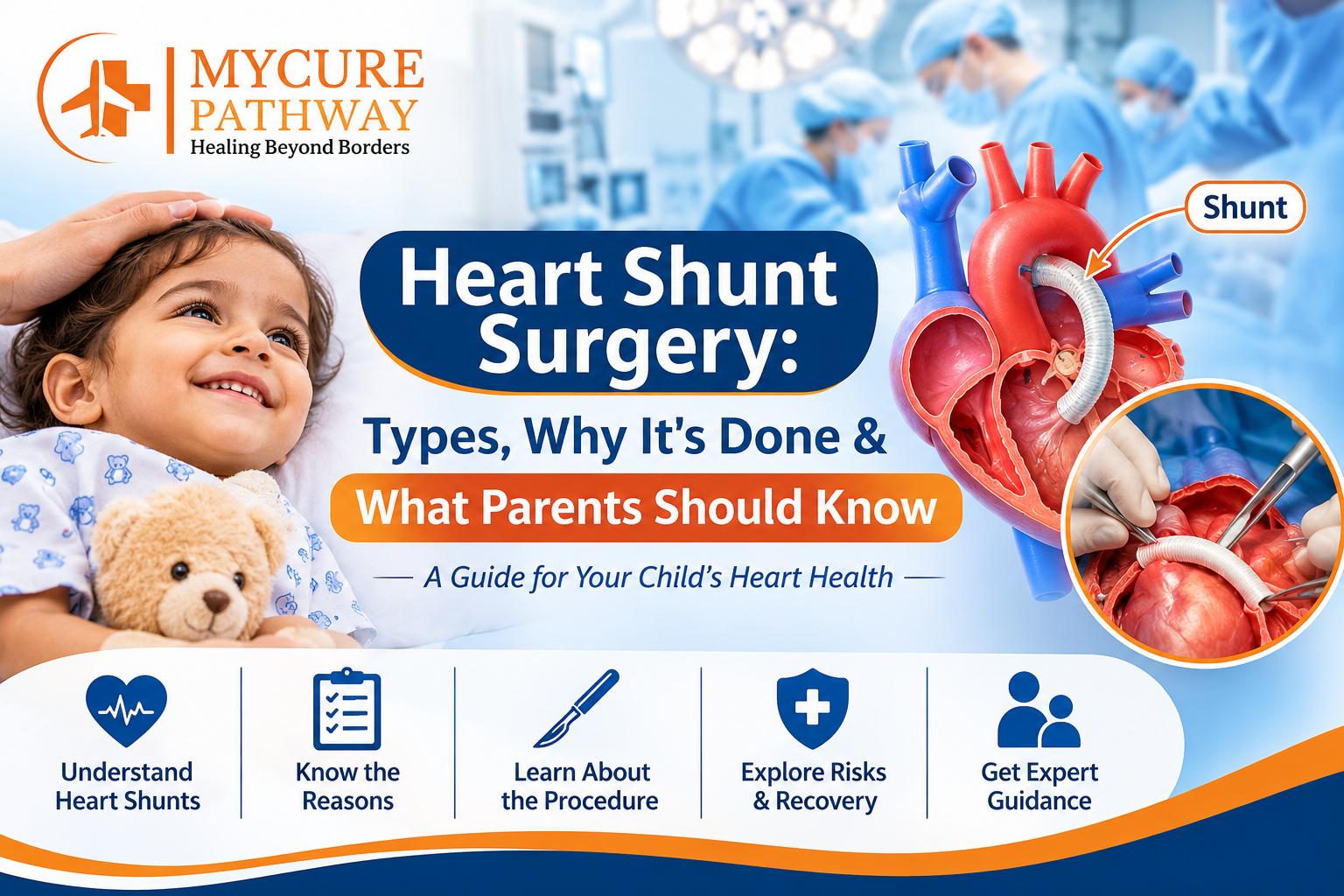
Shunt surgery for heart conditions is a specialised cardiac procedure that creates or modifies a pathway for blood to flow between different parts of the circulatory system. In children with certain complex congenital heart defects, surgeons may create an artificial connection between a blood vessel supplying the body and the pulmonary artery to increase blood flow to the lungs.
This procedure is often performed as part of a staged treatment plan for babies born with complex heart conditions. Depending on the diagnosis, doctors may recommend a temporary shunt to improve oxygen levels before performing further corrective or reconstructive surgery.
Understanding the types of heart shunts, reasons for surgery, treatment process, possible complications, and recovery can help parents feel more prepared when discussing treatment with a paediatric cardiac specialist.
In this guide, we explain how cardiac shunt surgery works, why children may need it, what parents should expect before and after the procedure, and how specialised paediatric cardiac care in India can help families explore treatment options.
What Is Heart Shunt Surgery?
Heart shunt surgery is a surgical procedure designed to create, modify, or sometimes close an abnormal pathway through which blood flows.
In paediatric cardiac surgery, the term commonly refers to procedures that create an additional route for blood to reach the lungs when a congenital heart defect restricts normal pulmonary blood flow.
Normally, the right side of the heart pumps oxygen-poor blood to the lungs through the pulmonary artery. In the lungs, blood receives oxygen and returns to the left side of the heart before being pumped throughout the body.
However, some babies are born with structural abnormalities that interfere with this circulation.
For example, children with certain cyanotic congenital heart conditions may have reduced blood flow to the lungs. This can cause low oxygen levels and a bluish appearance of the lips, skin, or fingernails, known as cyanosis.
A heart shunt procedure can help improve pulmonary blood flow by creating an alternative pathway.
It is important to understand that a surgical shunt does not necessarily correct the underlying heart defect. In many children, it is a palliative or bridging procedure that supports circulation until another operation becomes possible.
Why Do Children Need Shunt Surgery for Heart Conditions?
A congenital heart defect develops when the heart or its major blood vessels do not form normally before birth.
Some defects affect the walls separating the heart chambers, while others involve the valves, pulmonary arteries, or major blood vessels.
When a congenital condition reduces the amount of blood reaching the lungs, the child may not receive sufficient oxygen.
Doctors may recommend shunt surgery when additional pulmonary blood flow is needed to improve oxygen delivery and support the child’s growth.
Common reasons include:
1. Reduced Blood Flow to the Lungs
Certain congenital heart defects restrict the movement of blood from the heart to the lungs.
A surgical shunt creates an alternative route that allows more blood to reach the pulmonary arteries for oxygenation.
2. Low Oxygen Levels
Children with cyanotic heart defects may have reduced oxygen saturation.
Symptoms can include bluish lips, rapid breathing, feeding difficulties, and poor weight gain.
A cardiac shunt surgery may help improve oxygen levels by increasing blood flow to the lungs.
3. Complex Congenital Heart Defects
Some children are born with complex heart conditions that require multiple operations over time.
A temporary shunt may be used as an initial procedure to stabilise circulation before a more extensive cardiac operation.
4. Preparation for Further Heart Surgery
In certain children, surgeons perform a shunt procedure to improve the pulmonary blood supply while the child grows or becomes medically suitable for the next stage of treatment.
The timing depends on the child’s anatomy, oxygen levels, overall health, and the specific congenital heart condition.
What Are the Common Conditions That May Require a Heart Shunt Procedure?
Not every congenital heart defect requires shunt surgery. The procedure is mainly considered for children whose heart conditions result in inadequate blood flow to the lungs.
Some conditions associated with this treatment include:
1. Tetralogy of Fallot
Tetralogy of Fallot is a congenital heart condition involving four structural abnormalities that affect normal blood circulation.
Some babies with severe pulmonary obstruction may require an initial shunt procedure to increase blood flow to the lungs before complete corrective surgery.
2. Pulmonary Atresia
Pulmonary atresia occurs when the pulmonary valve does not develop properly, preventing normal blood flow from the right ventricle to the lungs.
Depending on the child’s anatomy, a surgical shunt or another intervention may be needed to establish adequate pulmonary blood flow.
3. Tricuspid Atresia
Tricuspid atresia is a congenital defect in which the tricuspid valve does not form normally.
The condition affects blood movement through the right side of the heart and may require staged surgical treatment. A shunt may be used in selected babies to support pulmonary circulation.
4. Hypoplastic Left Heart Syndrome (HLHS)
HLHS is a complex congenital heart condition in which the left side of the heart is severely underdeveloped.
Treatment usually involves staged reconstructive procedures. A systemic-to-pulmonary shunt or another specialised surgical connection may be part of the initial treatment strategy, depending on the chosen surgical approach.
5. Other Complex Cyanotic Heart Defects
Some babies have multiple abnormalities affecting the heart and major blood vessels.
A paediatric cardiac surgeon evaluates the child’s anatomy and circulation before deciding whether a shunt procedure is appropriate.
What Are the Different Types of Heart Shunts?
Understanding the types of heart shunts can help parents become familiar with the surgical options discussed by their child’s cardiologist.
The choice depends on the congenital heart defect, pulmonary artery development, age, weight, and overall condition of the child.
1. Modified Blalock-Taussig-Thomas (BT) Shunt
The modified Blalock-Taussig-Thomas shunt is one of the commonly used surgical procedures for increasing blood flow to the lungs in selected children with cyanotic congenital heart disease.
During this procedure, the surgeon places a small synthetic tube, usually made from specialised medical-grade material, between a systemic artery and a pulmonary artery.
This creates an alternative route for blood to reach the lungs.
Why is it performed?
- To increase blood flow to the lungs.
- To improve oxygen levels.
- To support pulmonary artery development.
- To stabilise children before further corrective surgery.
The modified BT shunt is generally considered a palliative procedure rather than a complete correction of the underlying heart defect.
2. Central Aortopulmonary Shunt
A central shunt creates a connection between the aorta and the main pulmonary artery using a synthetic graft.
Unlike the modified BT shunt, which connects a systemic artery to a branch pulmonary artery, a central shunt uses the aorta as the source of blood flow.
Doctors may consider this procedure when the child’s anatomy makes a central connection more suitable.
The objective is to increase pulmonary blood flow and improve oxygen delivery.
3. Classic Blalock-Taussig Shunt
The classic Blalock-Taussig shunt is an older surgical technique.
In this procedure, the surgeon connects the subclavian artery directly to the pulmonary artery. Unlike the modified version, the original technique involves dividing and redirecting the subclavian artery.
It is now rarely performed because modern modified techniques offer greater flexibility and preserve blood supply to the arm.
4. Sano Shunt (Right Ventricle-to-Pulmonary Artery Conduit)
The Sano procedure is another specialised approach used in selected babies with hypoplastic left heart syndrome as part of the Norwood stage of treatment.
It involves placing a conduit between the right ventricle and the pulmonary artery to provide blood flow to the lungs.
Although commonly discussed alongside other neonatal shunt procedures, it is technically a right ventricle-to-pulmonary artery conduit rather than a traditional systemic-to-pulmonary artery shunt.
The choice between a Sano conduit and other surgical approaches depends on the child’s anatomy and the cardiac team’s treatment strategy.
How Is Heart Shunt Surgery Performed?
The heart shunt procedure is performed by a specialised paediatric cardiac surgeon in a hospital equipped with paediatric cardiac operating facilities and intensive care services.
The exact surgical technique depends on the type of shunt being created.
Step 1: Preoperative Evaluation
Before surgery, doctors conduct a detailed assessment of the child’s heart condition.
Common investigations include:
- Echocardiography to examine the heart’s structure and blood flow.
- Electrocardiogram (ECG) to evaluate electrical activity.
- Chest X-ray to assess the heart and lungs.
- CT angiography or cardiac catheterisation in selected cases.
- Blood tests to evaluate general health and clotting function.
- Oxygen saturation assessment.
These investigations help the surgical team understand the child’s anatomy and determine the most appropriate treatment approach.
Step 2: Administration of Anaesthesia
The child receives general anaesthesia so that they remain asleep and comfortable throughout the procedure.
The anaesthesia team continuously monitors heart rate, oxygen levels, blood pressure, and other vital parameters.
Step 3: Accessing the Heart and Major Blood Vessels
Depending on the selected procedure, the surgeon accesses the chest through a surgical incision.
A median sternotomy or thoracotomy may be used.
The surgical team carefully identifies the required arteries and pulmonary vessels.
Step 4: Creating the Shunt
For a modified BT shunt, the surgeon connects a synthetic graft between a systemic artery and a pulmonary artery.
For a central shunt, the graft connects the aorta to the main pulmonary artery.
The surgeon selects the appropriate graft size to maintain a suitable balance of blood flow between the lungs and the rest of the body.
Step 5: Checking Blood Flow
Once the connection is completed, the surgical team checks whether the shunt is functioning properly.
They evaluate blood flow, pressure, and oxygenation to ensure that the connection is providing the intended circulation.
Step 6: Closing the Surgical Incision
After confirming the shunt’s function, the surgeon closes the surgical incision.
The child is transferred to the paediatric cardiac intensive care unit for continuous monitoring and postoperative care.
What Happens After Cardiac Shunt Surgery?
After surgery, the child requires close monitoring to ensure that the new blood-flow pathway is functioning correctly.
The recovery process generally begins in the paediatric cardiac intensive care unit.
Doctors and nurses monitor:
- Heart rate and rhythm.
- Oxygen saturation.
- Blood pressure.
- Breathing pattern.
- Blood circulation.
- Shunt function.
- Fluid balance.
- Feeding and nutritional intake.
Some children may require ventilator support immediately after surgery. The duration depends on their condition and recovery progress.
Medication After Surgery
Doctors may prescribe medications to support recovery and maintain appropriate blood flow.
These may include:
- Antiplatelet medicines to reduce the risk of clot formation.
- Other anticoagulant medicines when clinically indicated.
- Medicines to support heart function.
- Medications to manage fluid balance.
- Pain relief and other supportive treatments.
Parents should follow the prescribed medication schedule carefully and should never change or stop medicines without consulting the child’s cardiac team.
What Are the Possible Risks and Complications of Heart Shunt Surgery?
Like other major cardiac procedures, shunt surgery carries certain risks. The possibility of complications depends on the child’s age, weight, heart condition, and overall health.
Some possible complications include:
1. Shunt Blockage
Blood clots can form inside the artificial connection and obstruct blood flow to the lungs.
This is a serious complication that requires immediate medical attention.
2. Shunt Narrowing
The shunt may become narrower over time, reducing blood flow to the lungs.
Doctors may identify this problem through echocardiography or other imaging investigations.
3. Excessive Pulmonary Blood Flow
If too much blood flows through the shunt, it can put additional strain on the heart and lungs.
The surgeon carefully selects the shunt size to minimise this risk.
4. Bleeding
Bleeding may occur during or after surgery, particularly because major blood vessels are involved.
5. Infection
An infection may develop around the surgical incision or within the body. Appropriate wound care, antibiotics when indicated, and medical monitoring help reduce the risk.
6. Abnormal Heart Rhythm
Some children may develop irregular heart rhythms after cardiac surgery. These are monitored and treated according to their severity.
7. Respiratory Complications
Breathing difficulties or fluid-related problems may occur after surgery, particularly in children with complex cardiac conditions.
Parents should discuss the specific risks associated with their child’s diagnosis and planned procedure with the paediatric cardiac surgeon.
Recovery After Heart Shunt Surgery: What Should Parents Expect?
Recovery varies depending on the type of shunt, the child’s age, and the complexity of the heart defect.
Some children recover relatively quickly, while others require a longer hospital stay and additional support.
First Few Days After Surgery
During the initial recovery period, the child remains under close observation in the cardiac intensive care unit.
Doctors monitor circulation, breathing, oxygen levels, and shunt function.
Parents may initially notice surgical dressings, monitoring wires, intravenous lines, and other medical equipment. These are part of routine postoperative care.
Hospital Recovery
Once the child’s condition becomes stable, the medical team gradually reduces intensive monitoring.
Feeding may resume according to the child’s condition, and parents receive guidance on medication, wound care, and follow-up appointments.
Recovery at Home
After discharge, parents should:
- Give all prescribed medications on schedule.
- Follow the recommended feeding and nutrition plan.
- Keep the surgical wound clean and dry according to hospital instructions.
- Attend all follow-up appointments.
- Monitor the child’s breathing, feeding, activity, and colour.
- Avoid exposing the child to infections where possible.
- Follow the cardiologist’s guidance regarding physical activity and routine care.
Every child has an individual recovery plan, so parents should follow the instructions provided by their treating hospital.
What Warning Signs Should Parents Watch for After Surgery?
Parents play an important role in recognising early signs of complications after discharge.
Contact the treating cardiac team immediately if the child develops:
- Increasing bluish discolouration of the lips or skin.
- Sudden breathing difficulties.
- Unusual sleepiness or reduced responsiveness.
- Poor feeding or refusal to feed.
- Unusually cold hands and feet.
- A sudden change in oxygen saturation from the child’s prescribed baseline.
- Excessive sweating during feeding.
- Fever or signs of wound infection.
- A sudden decrease in activity or alertness.
Severe breathing difficulty, collapse, or unresponsiveness requires emergency medical assistance.
For children with a systemic-to-pulmonary shunt, sudden worsening of cyanosis can indicate reduced blood flow through the shunt and must be treated as an emergency.
Does Heart Shunt Surgery Permanently Correct a Congenital Heart Defect?
One of the most important things parents should understand is that a heart shunt procedure does not always provide a permanent correction.
In many children, it is performed to improve circulation and stabilise the condition before another operation.
For example, a baby with Tetralogy of Fallot may initially receive a shunt to increase blood flow to the lungs. Later, the child may undergo complete corrective surgery to address the underlying abnormalities.
Children with single-ventricle conditions may require multiple staged procedures, such as the Glenn and Fontan operations.
The long-term treatment plan depends on the child’s heart structure, pulmonary artery development, and response to earlier treatment.
Regular follow-up with a paediatric cardiologist is essential even after successful surgery.
Why Choose Specialised Paediatric Heart Surgery in India?
India has specialised cardiac hospitals and multidisciplinary medical teams that provide treatment for children with congenital heart defects.
International families often explore paediatric heart surgery in India because they want access to experienced cardiac specialists, advanced diagnostic facilities, and coordinated treatment services.
When evaluating a hospital, parents should consider:
- Experience of the paediatric cardiac surgeon with the specific congenital defect.
- Availability of paediatric cardiac intensive care.
- Experience with neonatal and infant cardiac procedures.
- Access to advanced cardiac imaging and diagnostic facilities.
- Availability of emergency cardiac support.
- Rehabilitation and postoperative follow-up services.
- Clear communication about treatment plans and expected outcomes.
Parents should also ask whether the hospital provides a complete treatment plan, including any future operations that may be required.
MyCurePathway helps international patients explore suitable hospitals and specialists in India for congenital heart disease treatment.
Frequently Asked Questions About Heart Shunt Surgery
1. Why does a baby need heart shunt surgery?
A baby may need heart shunt surgery when a congenital heart defect reduces the amount of blood reaching the lungs. The procedure creates an alternative pathway to improve pulmonary blood flow and oxygen levels. It may also prepare the child for further corrective surgery.
2. What is the most common type of heart shunt surgery?
The modified Blalock-Taussig-Thomas shunt is a commonly used surgical option for selected babies with cyanotic congenital heart defects and reduced pulmonary blood flow. Other options include central aortopulmonary shunts and the Sano conduit for specific conditions.
3. Is cardiac shunt surgery a major operation?
Yes. Cardiac shunt surgery is a specialised operation involving major blood vessels and requires general anaesthesia, a paediatric cardiac surgical team, and postoperative intensive care. The exact complexity depends on the child’s heart condition and the procedure selected.
4. How long does a child stay in the hospital after heart shunt surgery?
The hospital stay varies depending on the child’s condition, type of surgery, and recovery progress. Some children require several days in intensive care followed by additional hospital monitoring. Children with complex heart defects may need a longer stay.
5. Can a child live a normal life after heart shunt surgery?
Many children experience improved circulation and oxygen levels after successful shunt surgery. However, long-term outcomes depend on the underlying heart defect and whether additional procedures are needed. Regular cardiac follow-up is important for growth, development, and overall health.
6. What are the main risks of a heart shunt procedure?
Possible risks include shunt blockage, narrowing, excessive pulmonary blood flow, bleeding, infection, abnormal heart rhythms, and respiratory complications. The treating surgeon explains the individual risks before surgery.
7. Will my child need another operation after shunt surgery?
Some children require additional operations because a shunt is intended as a temporary or staged treatment. For example, children with Tetralogy of Fallot may undergo complete corrective surgery later, while children with single-ventricle conditions may need staged procedures such as Glenn and Fontan surgery.
8. Is heart shunt surgery available in India?
Yes. Specialised paediatric cardiac hospitals in India provide surgical treatment for selected congenital heart conditions, including systemic-to-pulmonary shunt procedures. Treatment suitability depends on the child’s diagnosis, age, anatomy, and overall health.
Conclusion: Understanding Heart Shunt Surgery and Treatment Options
Heart shunt surgery plays an important role in the management of selected congenital heart defects, particularly those that restrict blood flow to the lungs.
Procedures such as the modified Blalock-Taussig shunt and central aortopulmonary shunt can help improve pulmonary circulation and oxygen levels in babies who need additional support before further treatment.
For parents, understanding the purpose of the operation, the different types of heart shunts, possible complications, and recovery expectations can make the treatment journey easier to navigate.
Every child’s heart condition is unique. Therefore, the right treatment depends on detailed cardiac evaluation and the expertise of a specialised paediatric cardiac team.
Looking for Paediatric Heart Surgery in India?
MyCure Pathway supports international patients and their families in exploring congenital heart disease treatment in India.
Our team assists with medical record evaluation, hospital and specialist coordination, treatment planning, medical visa assistance, and travel arrangements.
If your child has been diagnosed with a congenital heart defect and your family is exploring cardiac shunt surgery, contact MyCurePathway to understand available treatment options and take the next step towards specialised cardiac care.