Medical Visa for India from Ethiopia: What Ethiopian Patients Need to Know
India has become a preferred destination for international patients seeking specialized and advanced medical treatment. Patients from Ethiopia travel to India for treatments ranging from cardiology and oncology to orthopaedics, neurology, kidney care, cancer treatment, and other complex procedures.
For Ethiopian citizens planning treatment in India, obtaining the correct visa is an important part of the medical travel process. The Medical Visa for India from Ethiopia allows eligible patients to travel to India for medical treatment at recognized hospitals and healthcare institutions.
However, submitting a visa application without the required supporting documents can lead to delays or complications. One of the most important documents is the hospital letter or invitation letter confirming the patient’s treatment plan.
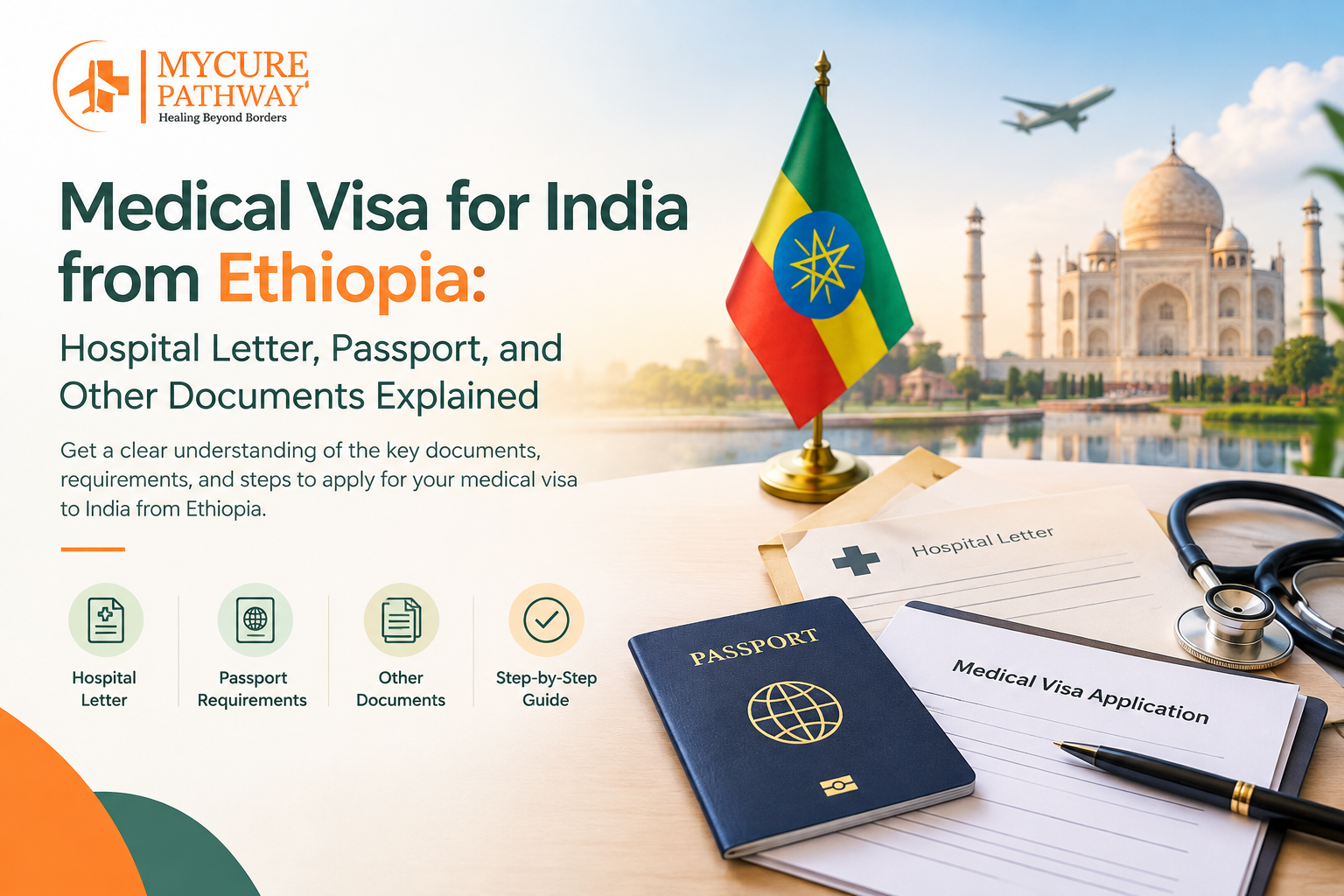
This guide explains the key medical visa documents for Ethiopia, including the passport, hospital letter, medical records, and other documents that may be required during the India medical visa application process.
What Is a Medical Visa for India from Ethiopia?
A medical visa is intended for foreign nationals who need to travel to India for medical treatment. Ethiopian patients seeking treatment at an Indian hospital can apply through the applicable Indian visa process, subject to the current eligibility requirements.
The visa process generally requires evidence that:
- The applicant genuinely requires medical treatment.
- The applicant intends to receive treatment at an Indian hospital or healthcare facility.
- The hospital has accepted or scheduled the patient for treatment.
- The patient’s identity and travel documents are valid.
- The applicant meets the applicable Indian visa requirements.
Depending on the patient’s circumstances and the current visa rules, the application may involve an e-Medical Visa or another appropriate medical visa category.
Because visa rules and documentation requirements can change, Ethiopian patients should verify the latest requirements before submitting an application.
What Documents Are Required for a Medical Visa for India from Ethiopia?
Preparing the documents in advance can make the visa process considerably smoother.
The exact documentation may vary according to the patient’s circumstances and the type of visa being requested. However, the following documents are commonly important when preparing an application.
1. Valid Ethiopian Passport
The passport is one of the most important documents for an Indian medical visa application.
Applicants should ensure that their passport:
- Is valid for the required period.
- Has sufficient blank pages.
- Contains clear and readable personal information.
- Matches the information entered in the visa application.
- Is not damaged.
The applicant should carefully check the spelling of their name, passport number, date of birth, and other details before submitting the application.
Any mismatch between the passport and visa application can create unnecessary complications.
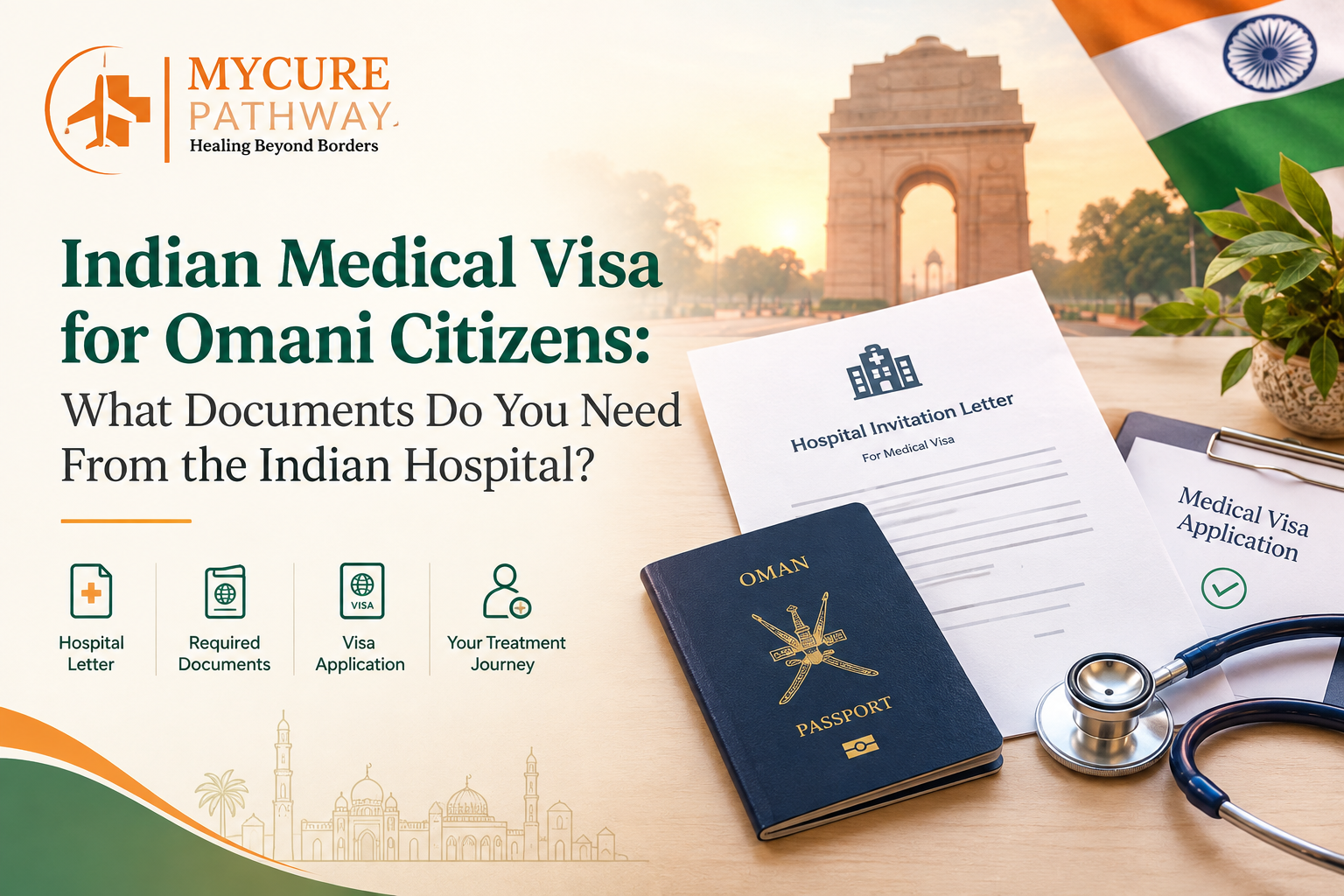
2. Indian Hospital Invitation Letter
The Indian hospital invitation letter is one of the most important supporting documents for an Ethiopian patient seeking medical treatment in India.
This letter generally establishes the connection between the patient and the Indian healthcare provider.
An Indian medical visa hospital letter may include information such as:
- Patient’s full name
- Passport details
- Recommended treatment
- Hospital or healthcare facility name
- Treating department or specialist
- Proposed treatment dates
- Estimated duration of treatment
- Hospital contact information
- Details relevant to the patient’s medical visit
The exact format and information contained in the letter may differ between hospitals.
Why Is the Hospital Letter Important?
The hospital letter helps demonstrate the medical purpose of the patient’s journey to India.
For example, if an Ethiopian patient has been diagnosed with a cardiac condition and has received a treatment recommendation from an Indian hospital, the hospital documentation can help establish why the patient needs to travel to India.
Patients should obtain the hospital documentation before proceeding with their visa application wherever required.
3. Medical Reports and Previous Treatment Records
Medical reports are another important component of the documentation process.
Depending on the treatment, the patient may need to provide relevant medical records such as:
- Diagnosis reports
- Blood test results
- CT or MRI reports
- X-rays
- Biopsy reports
- Previous surgery records
- Prescription history
- Discharge summaries
- Specialist consultation reports
- Other relevant clinical documents
These records can help the Indian hospital understand the patient’s medical condition and recommend an appropriate treatment plan.
For patients seeking complex procedures, providing comprehensive medical records can also help the hospital’s medical team evaluate the case before the patient’s arrival.
4. e-Medical Visa Document Checklist
For patients using the applicable e-Medical Visa route, it is particularly important to follow the current online application requirements.
A basic e-Medical Visa document checklist may include:
- Valid passport
- Recent passport-size photograph or photograph in the required format
- Hospital or medical institution documentation
- Relevant medical documents
- Completed online visa application
- Other documents requested by the Indian visa authorities
Applicants should not rely on an old checklist found online because visa rules, document formats, and eligibility conditions may change.
Before uploading documents, patients should check that all scans are clear, complete, and readable.
5. Passport-Size Photograph
A recent photograph may be required as part of the visa application.
The photograph should meet the format and size requirements specified for the relevant application.
A common mistake is uploading a photograph that does not meet the technical requirements.
Before submission, applicants should check:
- Image dimensions
- File format
- File size
- Background requirements
- Photograph quality
- Whether the face is clearly visible
Following the official specifications can help avoid unnecessary application issues.
6. Proof of Medical Treatment
The applicant may need documentation demonstrating the purpose of the trip.
This can include:
- Hospital appointment confirmation
- Treatment recommendation
- Hospital invitation letter
- Medical consultation documents
- Treatment estimate
- Medical correspondence with the hospital
The documentation should clearly indicate that the applicant is travelling to India for medical treatment.
7. Medical Attendant Documents
Some patients may need to travel with a family member or another attendant.
If a medical attendant visa is applicable, the attendant will generally need to submit their own identification and visa documentation as required by the relevant authorities.
The relationship between the patient and attendant may also need to be established through appropriate documentation.
For example, depending on the circumstances, the patient may travel with:
- Spouse
- Parent
- Adult child
- Other eligible family member or attendant
Patients should verify the current rules regarding the number and eligibility of medical attendants before making travel arrangements.
India Treatment Visa Requirements: What Should Patients Check Before Applying?
Before starting the application, Ethiopian patients should check several important details.
Check 1: Passport validity
Make sure the passport satisfies the current validity requirements.
Check 2: Hospital confirmation
Confirm that the Indian hospital has accepted the case and provided the necessary documentation.
Check 3: Medical records
Keep all relevant medical reports ready in digital and physical formats.
Check 4: Application information
Ensure that the information entered in the visa application exactly matches the passport.
Check 5: Photograph and document formats
Check the latest technical requirements before uploading documents.
Check 6: Travel dates
Treatment schedules, visa processing, and travel dates should be planned carefully.
Check 7: Medical attendant
If an attendant is travelling with the patient, check the applicable attendant visa requirements separately.
How Does the India Medical Visa Application Process Work?
Although the exact process depends on the visa category and current regulations, Ethiopian patients can generally expect several stages.
Step 1: Obtain Medical Evaluation
The patient should have relevant medical reports available and identify the treatment required.
Step 2: Contact an Indian Hospital
The patient’s medical records can be shared with an appropriate Indian hospital or specialist for evaluation.
The hospital may review the case and provide a treatment recommendation or appointment confirmation.
Step 3: Receive the Hospital Letter
Once the treatment arrangement is confirmed, the patient may receive the required hospital documentation, including the India medical visa hospital letter where applicable.
Step 4: Prepare the Documents
The patient should organize the passport, photograph, hospital documents, medical records and other required paperwork.
Step 5: Complete the Visa Application
The applicant can proceed with the relevant Indian medical visa application route and provide the requested information and documents.
Step 6: Verify the Application
Before submitting, carefully review:
- Passport number
- Name
- Date of birth
- Nationality
- Travel details
- Hospital information
- Treatment information
Step 7: Travel to India
Once the visa has been granted and travel arrangements are confirmed, the patient can travel to India according to the visa conditions.
Why the Indian Hospital Invitation Letter Should Be Checked Carefully
An Indian hospital invitation letter is more than just a formal document. It should accurately represent the patient’s intended treatment and hospital arrangement.
Patients should check whether:
- Their name is correctly spelled.
- Passport information is accurate.
- The hospital’s name is correct.
- Treatment information is consistent with their medical case.
- The proposed dates are reasonable.
- Contact information is included where appropriate.
If there is an error in the hospital letter, it is better to request clarification or correction before submitting the visa application.
Common Mistakes Ethiopian Patients Should Avoid
Even when patients have all the necessary documents, simple mistakes can create delays.
Submitting an expired or unsuitable passport
Always verify passport validity before beginning the process.
Using inconsistent information
The patient’s name and passport details should be consistent across the application and supporting documents.
Uploading unclear documents
Blurry scans, incomplete pages or unreadable medical reports can cause problems.
Applying without hospital confirmation
Patients should understand what hospital documentation is required for their particular visa route.
Using outdated visa information
Visa rules can change. Information from an old blog or social media post may no longer be applicable.
Booking non-refundable travel too early
Patients should consider visa processing and treatment confirmation before making major travel commitments.
How MyCure Pathway Can Help Ethiopian Patients
For an Ethiopian patient travelling to India for treatment, the visa process is only one part of international medical travel.
Patients may also need assistance with:
- Identifying suitable Indian hospitals
- Sharing medical records with hospitals
- Obtaining treatment opinions
- Coordinating hospital documentation
- Understanding visa documentation
- Travel planning
- Airport assistance
- Accommodation arrangements
- Hospital coordination
- Local support during treatment
MyCure Pathway helps international patients coordinate their medical journey to India, connecting patients with appropriate healthcare providers and supporting them through different stages of the medical travel process.
The objective is to make the journey from medical evaluation in Ethiopia to treatment in India more organized and easier to navigate.
Frequently Asked Questions About Medical Visa for India from Ethiopia
1. Can Ethiopian citizens apply for a medical visa to India?
Yes, Ethiopian citizens seeking eligible medical treatment in India can apply through the appropriate Indian medical visa route, subject to the current eligibility and documentation requirements.
2. Is an Indian hospital invitation letter required?
Hospital documentation is an important part of demonstrating the medical purpose of travel. The exact requirement and format depend on the applicable visa category and current Indian visa rules.
3. What medical visa documents are required from Ethiopia?
Commonly required documents may include a valid passport, photograph, hospital documentation, medical reports and the completed visa application, along with any additional documents requested by the authorities.
4. Can a family member travel with a patient from Ethiopia?
An eligible medical attendant may be able to accompany the patient, subject to the applicable visa rules and documentation requirements.
5. How should Ethiopian patients prepare for an Indian medical visa application?
Patients should first obtain a medical evaluation, identify an appropriate Indian hospital, arrange the required hospital documentation, collect their medical records, and then complete the relevant visa application using the latest official requirements.