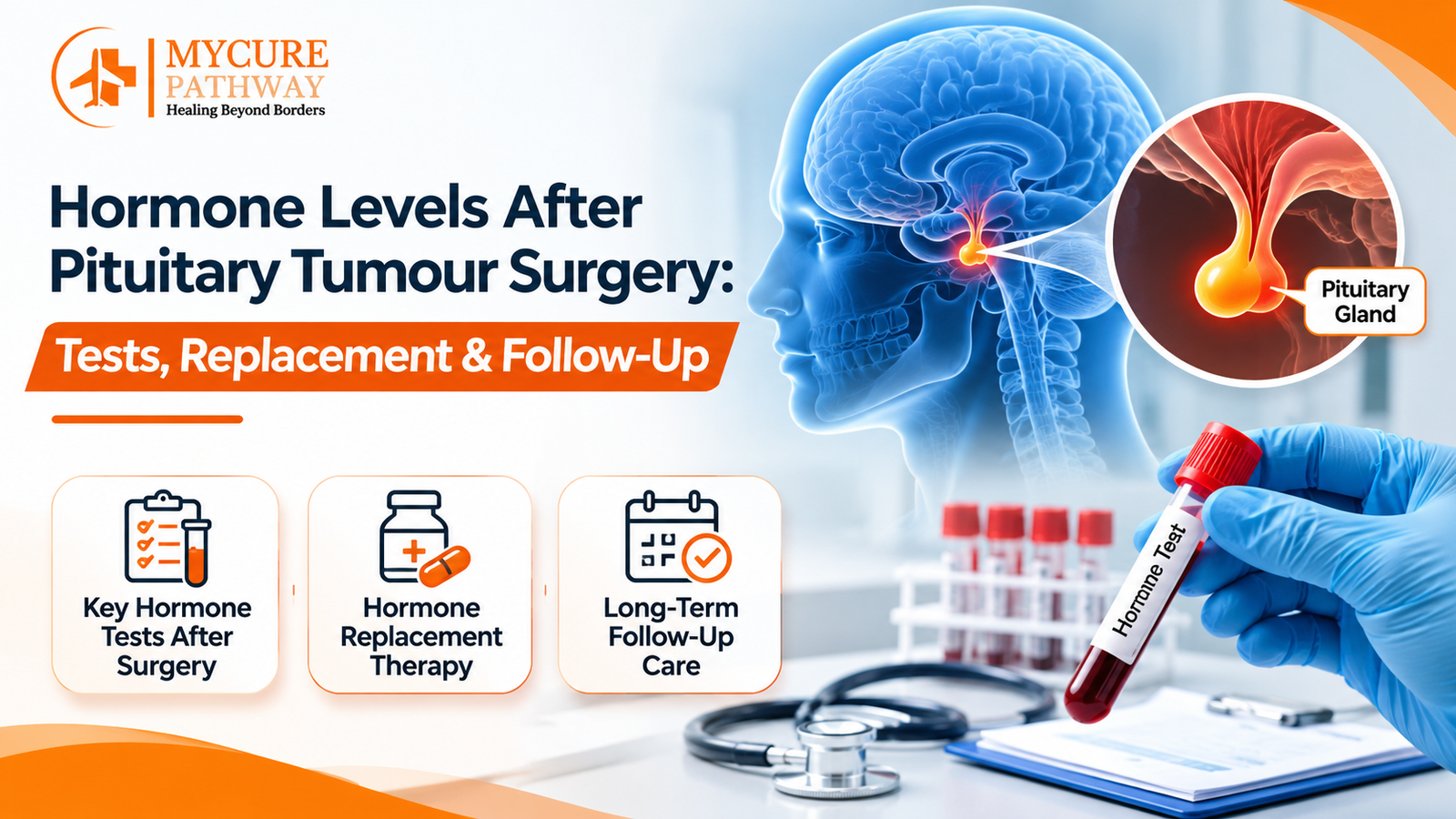
Pituitary tumour surgery is an important step in treating certain pituitary gland disorders, particularly when a tumour affects vision, produces excessive hormones, or puts pressure on surrounding brain structures. However, successful surgery is not the end of the treatment journey. Patients also need careful monitoring of their hormone levels to understand how well the pituitary gland is functioning after the operation.
The pituitary gland is a small but essential endocrine gland located at the base of the brain. It regulates several important hormones responsible for growth, metabolism, thyroid function, reproductive health, stress response, and water balance. When a tumour develops in this gland, it can interfere with normal hormone production. Surgery may improve gland function in some patients, but others may experience temporary or permanent hormonal deficiencies.
Understanding what happens after pituitary tumour surgery helps patients prepare for recovery and follow-up appointments. Doctors may recommend regular blood tests, hormone replacement therapy, electrolyte monitoring, and MRI scans to assess the surgical outcome and identify possible complications.
Some patients develop a condition called hypopituitarism, in which the pituitary gland does not produce sufficient amounts of one or more hormones. Others may experience diabetes insipidus, a condition that affects the body’s ability to regulate water balance.
This article explains the important hormone tests performed after pituitary tumour surgery, when hormone replacement may be required, how diabetes insipidus is managed, and why regular endocrinology and MRI follow-up are essential for long-term recovery.
Why Are Hormone Levels Important After Pituitary Tumour Surgery?
The pituitary gland controls several hormone-producing organs throughout the body. These include the thyroid gland, adrenal glands, ovaries, and testes.
When a pituitary tumour develops, it may affect hormone production in two ways:
- Excess hormone production: Some tumours release unusually high amounts of hormones, causing conditions such as prolactin excess, acromegaly, or Cushing’s disease.
- Reduced hormone production: A tumour may compress healthy pituitary tissue, preventing it from producing adequate amounts of essential hormones.
Surgery aims to remove the tumour or reduce its pressure on surrounding structures. However, the normal pituitary tissue may need time to recover. In some cases, hormone deficiencies may persist even after successful tumour removal.
Monitoring hormone levels after surgery helps doctors determine:
- Whether the pituitary gland is functioning normally.
- Whether hormone production has improved.
- Whether new hormonal deficiencies have developed.
- Whether hormone replacement therapy is necessary.
- Whether the original hormone-producing tumour is under control.
- Whether additional treatment or monitoring is required.
Hormonal recovery varies between patients, so follow-up schedules are personalised according to the type of tumour and surgical outcome.
What Is Hypopituitarism After Pituitary Surgery?
Hypopituitarism is a condition in which the pituitary gland produces insufficient amounts of one or more hormones.
It can occur before surgery because of tumour pressure or develop after an operation due to changes in the normal pituitary tissue or its blood supply.
Some patients experience temporary hormone deficiencies, while others may require long-term treatment.
Common Symptoms of Hypopituitarism
The symptoms depend on which hormones are affected.
Patients may experience:
- Persistent fatigue and weakness.
- Unexplained weight changes.
- Reduced sexual desire.
- Irregular menstrual periods.
- Difficulty maintaining normal body temperature.
- Low blood pressure.
- Reduced muscle strength.
- Changes in mood.
- Difficulty concentrating.
- Reduced fertility.
Some symptoms develop gradually and may be mistaken for normal postoperative tiredness.
For this reason, doctors use blood investigations rather than symptoms alone to assess pituitary function.
Which Hormones Can Be Affected?
The pituitary gland produces or regulates several important hormones.
| Hormone | Main function | Possible effects of deficiency |
| ACTH | Stimulates cortisol production | Fatigue, low blood pressure, weakness |
| TSH | Regulates thyroid hormone production | Weight changes, tiredness, cold intolerance |
| LH and FSH | Support reproductive function | Irregular periods, infertility, low testosterone |
| Growth hormone | Supports growth and metabolism | Reduced muscle mass, increased body fat |
| Prolactin | Supports breast milk production | Reduced milk production after childbirth |
Antidiuretic hormone, also called vasopressin, is produced in the hypothalamus and released through the posterior pituitary. Problems affecting this pathway can lead to diabetes insipidus.
Important Hormone Tests After Pituitary Tumour Surgery
Hormonal investigations are an essential part of postoperative care. The treating endocrinologist determines which tests are required and when they should be performed.
Some hormone levels are checked during the first few days after surgery, while others are assessed several weeks or months later.
1. Cortisol and ACTH Testing
Cortisol is an essential hormone produced by the adrenal glands. It helps regulate blood pressure, metabolism, inflammation, and the body’s response to physical stress.
The pituitary gland produces ACTH, which stimulates the adrenal glands to release cortisol.
If a pituitary tumour or surgery affects ACTH production, the body may not produce sufficient cortisol.
Doctors may recommend:
- Early morning serum cortisol testing.
- ACTH measurement when clinically indicated.
- ACTH stimulation testing in selected patients.
- Additional assessment of adrenal function during follow-up.
Cortisol levels are particularly important immediately after surgery because significant deficiency can lead to secondary adrenal insufficiency.
Patients with inadequate cortisol production may require glucocorticoid replacement, commonly hydrocortisone.
The decision to start, continue, or discontinue treatment must be made by the treating doctor after evaluating the patient’s clinical condition and test results.
2. Thyroid Function Tests
The pituitary gland produces thyroid-stimulating hormone (TSH), which controls thyroid hormone production.
After surgery, doctors may assess:
- Free T4 (FT4).
- Thyroid-stimulating hormone (TSH).
Low free T4 with an inappropriately low or normal TSH may indicate central hypothyroidism.
Symptoms can include:
- Fatigue.
- Weight gain.
- Dry skin.
- Constipation.
- Feeling unusually cold.
- Reduced concentration.
Patients with central hypothyroidism may require levothyroxine replacement.
Importantly, doctors should assess adrenal function before starting thyroid hormone treatment when adrenal insufficiency is possible, because untreated cortisol deficiency can become dangerous.
Thyroid function is commonly reassessed around six to eight weeks after pituitary surgery, although timing may vary according to the patient’s condition.
3. Prolactin Testing
Prolactin is a hormone involved in breast milk production.
Patients who undergo surgery for a prolactinoma may need regular prolactin measurements to assess whether the tumour has been successfully treated.
High prolactin levels may cause:
- Irregular menstrual periods.
- Milky nipple discharge.
- Reduced sexual desire.
- Infertility.
- Erectile dysfunction in men.
Following surgery, prolactin levels may decrease significantly if the hormone-producing tumour has been successfully removed.
However, persistent elevation may indicate residual tumour activity or another cause of hyperprolactinaemia.
The endocrinologist interprets prolactin results alongside symptoms and MRI findings.
4. Growth Hormone and IGF-1 Testing
Growth hormone plays an important role in metabolism, muscle development, and tissue maintenance.
Doctors commonly measure insulin-like growth factor 1 (IGF-1), which reflects growth hormone activity over a longer period.
IGF-1 testing is particularly important in patients who previously had acromegaly due to a growth hormone-producing pituitary tumour.
A measurement around three months after surgery is commonly used to assess biochemical remission in acromegaly.
Patients with suspected growth hormone deficiency may require additional stimulation testing.
Growth hormone replacement is considered only after appropriate evaluation and confirmation of deficiency.
5. LH, FSH, and Sex Hormone Testing
LH and FSH are pituitary hormones that regulate reproductive function.
In women, they influence ovarian function and oestrogen production. In men, they support testosterone production and sperm development.
Doctors may recommend:
- LH.
- FSH.
- Testosterone in men.
- Oestradiol in women when indicated.
- Additional reproductive hormone investigations.
Deficiencies may cause irregular periods, reduced fertility, low libido, erectile dysfunction, and other reproductive symptoms.
Hormonal replacement may be considered depending on age, symptoms, reproductive goals, and medical suitability.
What Is Hormone Replacement After Pituitary Surgery?
Hormone replacement after pituitary surgery is prescribed when the body cannot produce adequate amounts of essential hormones.
The purpose is to restore normal physiological functions and prevent complications associated with hormone deficiencies.
Not every patient requires hormone replacement. Some patients regain normal pituitary function after tumour removal, while others need temporary or lifelong treatment.
1. Cortisol Replacement
Patients with secondary adrenal insufficiency may require glucocorticoid replacement, commonly hydrocortisone.
This treatment helps replace the cortisol that the body cannot produce adequately.
Patients should receive clear instructions about:
- Medication timing.
- Dose adjustments during illness when prescribed.
- Emergency steroid precautions.
- Medical identification for adrenal insufficiency.
- When to seek urgent medical care.
Patients should never stop prescribed steroid replacement suddenly without medical advice.
2. Thyroid Hormone Replacement
Patients with central hypothyroidism may require levothyroxine.
This medication replaces thyroid hormone that the body cannot produce in sufficient amounts.
Doctors generally monitor free T4 to adjust treatment. TSH alone is not a reliable marker for monitoring central hypothyroidism.
3. Sex Hormone Replacement
Some patients develop reduced production of reproductive hormones after pituitary surgery.
Depending on individual circumstances, treatment may include:
- Oestrogen with appropriate progestogen protection for eligible women with an intact uterus.
- Testosterone replacement for selected men with confirmed deficiency.
- Fertility-related hormonal treatment when pregnancy or fertility preservation is a goal.
These treatments require specialist assessment because they are not appropriate for everyone.
4. Growth Hormone Replacement
Some patients develop growth hormone deficiency after pituitary surgery.
Growth hormone replacement may be considered when deficiency is confirmed through appropriate testing and the patient meets the relevant clinical criteria.
It is not routinely prescribed immediately after surgery. Doctors generally allow time for pituitary function to stabilise before assessing the need for treatment.
Why Is Hormone Replacement Important?
Untreated hormonal deficiencies can affect several aspects of health.
Appropriate replacement therapy may help:
- Improve energy levels.
- Maintain normal metabolism.
- Support blood pressure regulation.
- Protect bone health.
- Improve reproductive function.
- Support normal daily activities.
- Prevent serious complications associated with cortisol deficiency.
The treatment plan must be personalised and reviewed regularly by an endocrinologist.
Diabetes Insipidus After Pituitary Tumour Surgery
Diabetes insipidus is an important condition that may develop after certain pituitary or nearby brain surgeries.
It occurs when the body does not produce enough vasopressin or cannot respond properly to it. Vasopressin helps the kidneys conserve water and maintain fluid balance.
When this hormone is deficient, the kidneys produce unusually large amounts of dilute urine.
Symptoms of Diabetes Insipidus
Patients may experience:
- Excessive urination.
- Frequent urination at night.
- Unusual thirst.
- Increased water consumption.
- Dry mouth.
- Dehydration.
- Elevated blood sodium levels.
In newborns and young children, symptoms may be more difficult to recognise and require specialised assessment.
Why Can Diabetes Insipidus Develop After Surgery?
The hypothalamus and posterior pituitary are involved in vasopressin production and release.
Surgery involving the pituitary stalk or nearby structures can temporarily or permanently affect this system.
Some patients develop temporary diabetes insipidus that improves during recovery. Others may require long-term treatment.
How Is Diabetes Insipidus Managed?
Doctors monitor urine output, fluid intake, blood sodium, and other laboratory findings.
Treatment may include desmopressin (DDAVP), a medication that acts like vasopressin.
However, treatment must be carefully adjusted because excessive desmopressin can cause water retention and dangerously low blood sodium.
Some patients experience changes in water balance after initial diabetes insipidus, including a delayed phase of inappropriate antidiuretic hormone secretion (SIADH), which can cause low sodium levels.
For this reason, patients should follow their medical team’s fluid and medication instructions rather than adjusting water intake or desmopressin independently.
When Should Patients Seek Medical Attention?
Contact the treating medical team if there is:
- Excessive urination.
- Unusual or persistent thirst.
- Severe weakness.
- Nausea or vomiting.
- New confusion.
- Severe headache.
- Unusual drowsiness.
Confusion, seizures, or reduced consciousness require emergency medical attention.
Pituitary MRI Follow-Up: Why Is It Important?
Hormonal testing evaluates how well the pituitary gland is functioning, while MRI scans help doctors assess the structural outcome of surgery.
Pituitary MRI follow-up is important because it helps identify:
- Whether the tumour has been completely removed.
- Whether any residual tumour remains.
- Whether the remaining tissue is changing in size.
- Whether the tumour has returned.
- Whether additional treatment may be necessary.
When Is the First MRI Performed After Surgery?
The timing depends on the tumour type, surgical findings, and hospital protocol.
For many patients, an MRI is performed approximately three to four months after surgery to establish a postoperative baseline.
Some patients may require earlier imaging if there are specific clinical concerns.
Subsequent scans may be scheduled at intervals based on the tumour’s behaviour, hormonal activity, and initial MRI findings.
Patients with functioning tumours may require long-term imaging and hormone monitoring even after successful surgery.
What Happens If MRI Shows Residual Tumour?
A small amount of remaining tumour does not always mean immediate additional treatment is necessary.
The medical team evaluates:
- Tumour size and location.
- Hormonal activity.
- Visual function.
- Growth on follow-up scans.
- Response to previous treatment.
Depending on these findings, options may include regular monitoring, medication, repeat surgery, or radiation therapy.
Why Is an Endocrinologist Important After Pituitary Surgery?
A neurosurgeon manages the surgical aspects of treatment, but an endocrinologist plays an equally important role in long-term recovery.
The endocrinologist evaluates pituitary function and determines whether hormonal deficiencies require treatment.
During follow-up appointments, the specialist may:
- Review blood hormone results.
- Assess cortisol and thyroid function.
- Monitor prolactin and IGF-1 levels.
- Evaluate reproductive hormone levels.
- Assess symptoms of hypopituitarism.
- Manage diabetes insipidus.
- Adjust hormone replacement medications.
- Coordinate long-term endocrine monitoring.
Patients with complex pituitary tumours may benefit from a multidisciplinary team involving a neurosurgeon, endocrinologist, ophthalmologist, and radiologist.
This coordinated approach helps ensure that both the tumour and its hormonal effects are managed.
Follow-Up Timeline After Pituitary Tumour Surgery
Postoperative follow-up varies depending on the type of tumour, the surgical approach, and the patient’s hormonal condition.
The following table provides a general overview.
| Time after surgery | Common follow-up activities |
| First 1–5 days | Cortisol assessment, sodium monitoring, fluid balance, and diabetes insipidus surveillance |
| First 1–2 weeks | Clinical review and additional blood tests when required |
| Around 6–8 weeks | Thyroid and adrenal function reassessment, as clinically appropriate |
| Around 6–12 weeks | Comprehensive pituitary hormone evaluation |
| Around 3 months | IGF-1 assessment in acromegaly and postoperative MRI when indicated |
| 3–6 months | Review of MRI, hormone results, and treatment response |
| Long term | Periodic hormone testing and MRI based on tumour type and recurrence risk |
These are general reference intervals, not a fixed schedule for every patient. Some hormone tests must be performed earlier, while others need to be delayed until the body has recovered sufficiently for reliable assessment.
Lifestyle and Recovery Tips After Pituitary Tumour Surgery
Following medical advice and maintaining healthy habits can support recovery after surgery.
1. Take Prescribed Medicines Regularly
Patients should follow the prescribed schedule for hormone replacement and other medications.
Do not change or stop medicines without consulting the treating doctor.
2. Attend All Follow-Up Appointments
Regular appointments help doctors identify hormone deficiencies, evaluate recovery, and detect possible tumour recurrence.
3. Monitor Changes in Symptoms
Pay attention to unusual thirst, excessive urination, fatigue, dizziness, changes in vision, and unexplained weight changes.
Report persistent or worsening symptoms to the medical team.
4. Maintain a Balanced Diet
A balanced diet with adequate protein, vegetables, fruits, and essential nutrients supports general recovery.
Patients with specific fluid or electrolyte instructions should follow the recommendations of their treating team.
5. Follow Activity Restrictions
Avoid strenuous activities, heavy lifting, and other restricted movements until the neurosurgeon confirms that these activities are safe.
6. Maintain Communication Between Specialists
Keep the endocrinologist and neurosurgeon informed about new symptoms, medication changes, and investigation results.
This is particularly important for patients requiring long-term hormone replacement.
Frequently Asked Questions About Hormone Levels After Pituitary Tumour Surgery
1. How long does it take for hormone levels to normalise after pituitary surgery?
Hormone recovery varies depending on the tumour type, surgical outcome, and condition of the remaining pituitary tissue. Some hormone levels improve within days or weeks, while others require several months of monitoring. Certain deficiencies may persist and require long-term replacement.
2. Is hormone replacement necessary after pituitary tumour surgery?
No. Not every patient requires hormone replacement. It is prescribed when testing confirms that the body cannot produce sufficient amounts of a particular hormone. Some patients regain normal pituitary function after surgery.
3. What is hypopituitarism after pituitary surgery?
Hypopituitarism occurs when the pituitary gland produces insufficient amounts of one or more hormones. It may develop due to the tumour itself or following surgery. Symptoms can include fatigue, weakness, menstrual disturbances, reduced sexual desire, and metabolic changes.
4. Can diabetes insipidus develop after pituitary surgery?
Yes. Surgery involving the pituitary stalk or nearby structures may affect vasopressin regulation, resulting in diabetes insipidus. Symptoms include excessive urination, increased thirst, and dehydration. Some cases are temporary, while others require longer-term treatment.
5. When should an MRI be performed after pituitary tumour surgery?
A postoperative MRI is commonly performed around three to four months after surgery to establish a baseline. The exact timing depends on the tumour type, surgical findings, and the treating specialist’s recommendations.
Conclusion: Long-Term Hormone Monitoring Is Essential After Pituitary Surgery
Recovery does not end when a pituitary tumour is removed. Patients also need careful evaluation of their hormonal health to ensure that the remaining pituitary gland is functioning properly.
Monitoring after pituitary tumour surgery helps doctors identify conditions such as hypopituitarism, thyroid deficiency, adrenal insufficiency, and diabetes insipidus. Blood tests, electrolyte monitoring, hormone replacement when necessary, and regular pituitary MRI follow-up all contribute to effective long-term care.
An experienced endocrinologist plays an important role in managing hormone levels, adjusting medications, and monitoring recovery. At the same time, regular neurosurgical follow-up helps assess the surgical outcome and identify possible tumour recurrence.
Every patient’s recovery is different. Some individuals regain normal hormone function, while others require ongoing treatment and monitoring.
Looking for Pituitary Tumour Treatment and Follow-Up Care in India?
MyCurePathway helps international patients explore specialised pituitary tumour treatment and neurosurgical care in India.
Our team can assist with medical report coordination, specialist consultations, hospital treatment estimates, medical visa documentation, and travel arrangements.
Whether you are exploring pituitary tumour surgery, postoperative hormone management, or long-term follow-up, contact MyCure Pathway to understand the available treatment and specialist consultation options.