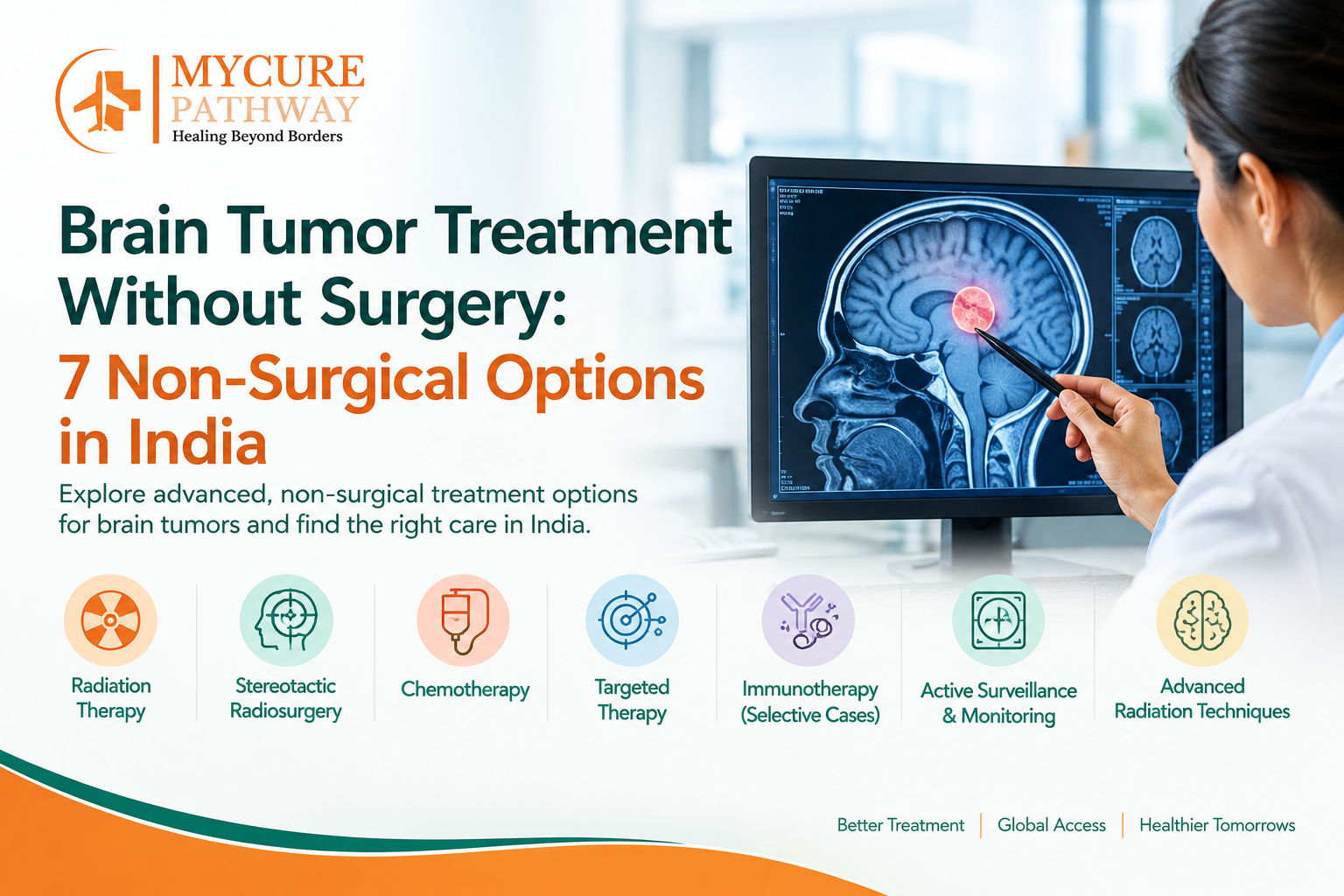
A brain tumor diagnosis can be overwhelming for patients and their families, particularly when surgery seems complicated or risky. One of the most common questions people ask is: Can a brain tumor be cured without surgery?
The answer is yes in selected cases, but it depends on the tumor type, location, size, growth rate, symptoms, and whether it is benign or malignant. Some brain tumors can be safely monitored for years, while others may respond to radiation therapy, chemotherapy, or targeted treatments. However, certain tumors require surgery or a combination of treatments for the best possible outcome.
Understanding the available options can help patients make informed decisions with their medical team. This guide explains when brain tumor treatment without surgery may be possible, which non-surgical options specialists consider, how meningiomas are managed, and what patients should understand about survival rates.
Can a Brain Tumor Be Cured Without Surgery?
Yes, some brain tumors can be controlled or treated successfully without an operation. In some cases, treatment may achieve long-term remission or a cure. However, not every brain tumor can be cured without surgery, and some aggressive tumors require a combination of treatment approaches.
According to established cancer treatment guidance, available options for adult brain tumors include active surveillance, radiation therapy, chemotherapy, targeted therapy, and supportive care, depending on the specific diagnosis.
The term “cure” also needs careful consideration. A tumor that remains stable for years without treatment is not necessarily cured. Similarly, a tumor that shrinks after radiation therapy may still require long-term monitoring.
Doctors generally consider the following factors before recommending treatment without surgery:
- Tumor type: Different tumors respond differently to radiation, medicines, and observation.
- Tumor grade: Low-grade tumors generally grow more slowly than high-grade tumors, although individual behavior varies.
- Location: A tumor near critical brain structures may be difficult to remove safely.
- Size and growth: Small, slow-growing tumors may be suitable for monitoring in selected cases.
- Symptoms: Headaches, seizures, weakness, vision changes, or other neurological symptoms may influence treatment urgency.
- Patient health: Age, other medical conditions, functional status, and personal preferences also matter.
The most appropriate approach is determined after reviewing MRI or CT scans, neurological findings, and, when necessary and feasible, tissue or molecular test results.
1. Brain Tumor Watch and Wait: When Is Monitoring Appropriate?
One of the most important approaches to brain tumor management without surgery is active surveillance, often described as a “watch and wait” strategy.
Despite the name, this does not mean ignoring the tumor. It involves regular medical appointments, neurological assessments, and follow-up MRI scans to identify any changes in size, appearance, or symptoms.
Which brain tumors can be monitored?
Specialists may recommend surveillance for certain tumors that are small, slow-growing, and not causing significant symptoms. Examples may include:
- Small, asymptomatic meningiomas that appear likely to be benign.
- Selected low-grade tumors when immediate treatment is not considered necessary.
- Certain lesions whose imaging features and clinical behavior support observation.
The decision is individualized. Some tumors can remain stable for a long time, while others may grow or begin causing symptoms.
What happens during active surveillance?
A typical monitoring plan may include:
- An initial MRI scan to establish the tumor’s size and location.
- A review of symptoms and neurological function.
- Repeat MRI scans at intervals decided by the treating specialist.
- Earlier reassessment if new symptoms develop or existing symptoms worsen.
- A treatment review if imaging shows growth or the clinical situation changes.
The timing of follow-up scans varies according to the diagnosis and the patient’s risk factors.
Is watchful waiting safe?
It can be appropriate when specialists believe the immediate risks of intervention outweigh the risks of observation. However, it is not suitable for every tumor.
Patients should attend scheduled appointments and understand which symptoms require urgent medical attention. New seizures, sudden weakness, difficulty speaking, confusion, or sudden vision loss require emergency assessment.
2. Benign Brain Tumor Treatment Without Surgery
A benign brain tumor is non-cancerous, but that does not mean it is always harmless. Depending on its size and location, even a benign tumor can press on nearby brain tissue, nerves, or blood vessels.
Benign brain tumor treatment therefore depends on whether the tumor is growing, causing symptoms, or threatening important neurological functions.
When can a benign tumor be treated without surgery?
Non-surgical management may be considered when:
- The tumor is small and produces no significant symptoms.
- Imaging suggests a slow-growing, benign lesion.
- The tumor is not pressing on critical structures.
- The risks of surgery are considered greater than the expected benefit.
- A suitable radiation-based treatment is available for the particular tumor.
Observation is often considered for selected meningiomas. Certain tumors may also be treated using focused radiation, depending on their diagnosis and location.
Does every benign brain tumor need treatment?
No. Some benign tumors can be monitored without immediate intervention. Others need treatment because they grow, cause seizures, affect vision or hearing, or increase pressure inside the skull.
The key distinction is that benign does not automatically mean safe to ignore. Regular specialist follow-up is important even when treatment is initially deferred.
3. Meningioma Treatment Without Surgery
Meningiomas are tumors that develop from the membranes surrounding the brain and spinal cord. Many grow slowly, and some are discovered incidentally during scans performed for unrelated reasons.
Meningioma treatment without surgery may be possible for selected patients, particularly those with small, asymptomatic tumors that show no concerning growth.
Option A: Active surveillance
For a small meningioma that is not causing symptoms, a specialist may recommend periodic MRI scans rather than immediate treatment.
Surveillance helps doctors determine whether the tumor remains stable or shows growth that could justify intervention.
Option B: Stereotactic radiosurgery
Stereotactic radiosurgery is a highly focused radiation treatment that delivers radiation to a precisely defined target. Despite its name, it does not involve an incision or the surgical removal of the tumor.
It may be considered for certain small meningiomas, particularly when surgery is unsuitable or when the tumor’s location and characteristics make focused radiation an appropriate option.
The aim is generally to stop or slow tumor growth. The tumor does not necessarily disappear immediately, and follow-up scans remain necessary.
Option C: Fractionated radiation therapy
Some tumors are treated with radiation delivered over multiple sessions rather than one highly focused session. This approach may be considered when the tumor is larger, lies close to sensitive structures, or requires a different radiation strategy.
Can a meningioma disappear without surgery?
Radiation may control a meningioma’s growth, but complete disappearance is not guaranteed. Some tumors remain visible on MRI even when treatment is successful.
Treatment decisions also depend on the meningioma’s grade. Higher-grade meningiomas generally require more intensive management than typical grade 1 tumors.
Patients should discuss the likelihood of tumor control, possible side effects, and long-term follow-up with a neurosurgeon and radiation oncologist.
4. Radiation Therapy for Brain Tumors
Radiation therapy uses high-energy radiation to damage tumor cells or prevent them from continuing to grow. It is an established treatment for several types of brain tumors, either as a primary treatment or as part of a combined treatment plan.
For patients seeking Brain Tumor without surgery treatment, radiation may be an option when the tumor cannot be safely removed, surgery is not recommended, or the specific tumor is expected to respond to radiation.
Types of radiation therapy
Stereotactic radiosurgery (SRS): Delivers highly focused radiation to a target, usually over one or a few treatment sessions, depending on the technique and clinical plan.
Fractionated radiotherapy: Delivers radiation in smaller doses over multiple sessions. It may be preferred for certain tumors or locations where limiting the dose to surrounding tissues is particularly important.
Whole-brain radiation therapy: Treats the entire brain and may be used in selected situations, including certain cases of cancer that has spread to the brain.
Proton beam therapy: Uses proton radiation to deliver a planned dose to a target while potentially reducing radiation exposure to some surrounding tissues. Its suitability depends on the tumor, treatment goals, and availability.
Is radiation therapy as effective as surgery?
There is no single answer. Effectiveness depends on the tumor type, grade, size, location, and intended treatment outcome.
For some small meningiomas, focused radiation can provide excellent tumor control. Certain tumors may respond well to radiation even when surgery is not performed. However, radiation does not provide immediate physical removal of a mass, and it may not relieve pressure as quickly as surgery when decompression is urgently needed.
Potential side effects include fatigue, swelling around the treated area, and, less commonly, injury to nearby healthy tissue. Specialists assess these risks before recommending treatment.
5. Chemotherapy and Drug-Based Treatment
Chemotherapy uses medicines to kill cancer cells or slow their growth. It is useful for selected brain tumors, but it is not an effective stand-alone option for every type.
The brain has a protective barrier that prevents many substances from entering brain tissue easily. Consequently, drug selection depends on the tumor’s biology and whether a medicine can reach the tumor at an effective concentration.
When is chemotherapy used?
Chemotherapy may be recommended for certain gliomas, primary central nervous system lymphomas, and other tumors according to their type and treatment plan. It may be used alongside radiation therapy or after surgery, but some patients receive drug-based treatment when surgery is not feasible.
The exact medicine and schedule depend on the diagnosis, molecular characteristics, prior treatment, and overall health.
What about targeted therapy?
Targeted therapies act on particular molecular features that help tumor cells grow or survive. They may be appropriate for specific tumors with relevant biomarkers or genetic alterations.
Before treatment, specialists may recommend tissue testing or molecular analysis when it can guide therapy. Not all brain tumors have an established targeted treatment, and these medicines do not guarantee a cure.
Patients should avoid taking unprescribed medicines or supplements marketed as tumor-shrinking treatments. Such products may have unproven benefits or interfere with cancer treatment.
6. Can a Malignant Brain Tumor Be Cured Without Surgery?
Malignant brain tumors are cancerous, and their behavior varies substantially. Some are more responsive to treatment than others.
Certain malignant tumors can be treated without an operation in carefully selected situations, including when surgery is unsafe or the diagnosis can be established through other appropriate methods. However, many malignant brain tumors are treated using a combination of surgery, radiation therapy, and medicines.
For example, standard treatment for many patients with glioblastoma involves surgery when feasible, followed by radiation and chemotherapy. If surgery cannot be performed, the team may consider radiation, drug treatment, or another individualized plan based on the tumor and the patient’s condition.
Other diagnoses may have different approaches. Some primary central nervous system lymphomas, for instance, are commonly treated with specific chemotherapy-based regimens rather than routine surgical removal of the tumor.
Why is an accurate diagnosis important?
Two tumors that appear similar on an initial scan may behave differently and require different treatments. MRI findings can provide important clues, but imaging alone does not always establish the exact tumor type.
When it is safe and clinically necessary, a biopsy can help identify the tumor’s cellular and molecular characteristics. In selected cases, doctors may make a diagnosis using imaging and other clinical findings when biopsy would be unsafe or unnecessary.
A specialist team can explain whether a non-surgical treatment offers a reasonable chance of tumor control, symptom relief, or longer survival in an individual case.
7. Supportive Care When Surgery Is Not an Option
Supportive care is an important part of brain tumor management. It focuses on controlling symptoms, reducing treatment-related problems, and maintaining the patient’s quality of life.
It may be provided alongside radiation, chemotherapy, surveillance, or other treatments.
Supportive care may include:
- Anti-seizure medicines: For patients who have seizures or meet specific clinical indications.
- Medicines for brain swelling: Corticosteroids may be prescribed when swelling around a tumor causes symptoms.
- Pain management: Treatment tailored to the cause and severity of pain.
- Physiotherapy and rehabilitation: Support for movement, balance, strength, speech, or daily activities.
- Psychological support: Help for patients and caregivers dealing with anxiety, uncertainty, and changes in daily life.
- Palliative care: Specialist support to improve comfort and quality of life, which can be provided alongside active cancer treatment.
Supportive care does not necessarily treat or eliminate the tumor itself. However, it can make a meaningful difference to daily functioning and well-being.
8. Brain Tumor Survival Rate: What Should Patients Know?
The brain tumor survival rate varies widely, and no single percentage accurately predicts the outcome for every patient.
Survival statistics may be reported by tumor type, grade, age group, or other characteristics. They describe groups of people rather than predicting exactly what will happen to an individual.
Factors that can affect prognosis include:
- The exact tumor diagnosis and grade.
- Molecular and genetic characteristics of the tumor.
- The patient’s age and general health.
- The tumor’s location and size.
- Whether it has spread from another part of the body.
- How well it responds to treatment.
- Whether it can be safely removed or controlled with other therapies.
For example, a small, slow-growing meningioma may have a very different outlook from an aggressive glioma. Even within the same broad tumor category, molecular features can influence prognosis.
Does avoiding surgery reduce survival?
Not necessarily. If a tumor is suitable for surveillance or a proven non-surgical treatment, avoiding an operation may be a reasonable medical decision. However, avoiding surgery when it is strongly recommended could delay effective treatment and allow some tumors to progress.
The important question is not simply whether surgery can be avoided, but which treatment offers the best balance of tumor control, safety, neurological function, and quality of life for the individual patient.
Patients should ask their specialists to explain the expected benefits, limitations, and risks of each option, including what could happen if treatment is delayed.
9. How Specialists Decide on the Best Treatment Plan
Choosing treatment for a brain tumor involves more than identifying whether it is benign or malignant. Specialists review the complete clinical picture before recommending observation, radiation, medication, surgery, or a combination of approaches.
A typical evaluation may involve:
- MRI or CT imaging: To assess the tumor’s location, size, appearance, and relationship to nearby structures.
- Neurological examination: To evaluate vision, strength, coordination, speech, memory, and other functions.
- Review of previous scans: To determine whether the tumor is growing or changing.
- Biopsy or molecular testing, when appropriate: To clarify the diagnosis and guide treatment.
- Multidisciplinary consultation: A neurosurgeon, neuro-oncologist, radiation oncologist, and other specialists may contribute to the decision.
- Discussion of treatment goals: The team explains whether the aim is cure, long-term control, prevention of progression, symptom relief, or preservation of function.
Patients should seek a second opinion if they are uncertain about a proposed treatment, especially when surgery carries significant risks or when several treatment options are available. A second opinion should not delay urgent treatment for a rapidly worsening condition.
10. Exploring Brain Tumor Treatment in India
India offers specialist evaluation and a range of brain tumor treatment services at tertiary-care hospitals. Depending on the diagnosis and individual needs, treatment options may include neurosurgery, radiation oncology, stereotactic radiosurgery at suitably equipped centers, chemotherapy, and long-term imaging follow-up.
For international patients, planning treatment involves more than choosing a hospital. It is important to obtain a clear diagnosis, share relevant medical records, understand the proposed treatment plan, and discuss the expected length of stay and follow-up requirements.
Patients considering treatment in India should ask the hospital for a written medical opinion that addresses:
- The suspected or confirmed tumor type.
- Whether surgery is necessary or can reasonably be avoided.
- The recommended non-surgical alternatives, if appropriate.
- The expected benefits, risks, and limitations of each option.
- The likely treatment schedule and follow-up requirements.
- An estimated treatment cost and any additional expenses.
MyCurePathway helps international patients explore treatment options in India and coordinate with healthcare providers. The appropriate hospital and specialist should be selected according to the patient’s diagnosis, clinical needs, and treating doctor’s recommendations.
Conclusion
Can a brain tumor be cured without surgery? In some cases, yes. Selected benign tumors may be monitored, certain meningiomas can be managed with focused radiation, and some malignant tumors may respond to radiation or drug-based treatments when surgery is unsuitable.
However, there is no universal non-surgical treatment for all brain tumors. Some require surgery, and others benefit from a combination of treatments. A stable tumor is not necessarily cured, and the absence of symptoms does not always mean that treatment is unnecessary.
The safest next step is to obtain a specialist assessment based on imaging, symptoms, and an accurate diagnosis. With an individualized plan and appropriate follow-up, patients can better understand their options and make informed decisions about treatment.
If you or a family member has been diagnosed with a brain tumor, contact MyCure Pathway to explore specialist consultations and brain tumor treatment options in India. Treatment decisions should always be made with qualified medical professionals who can assess the individual case.
Frequently Asked Questions (FAQs)
1. Can a brain tumor go away without surgery?
Some tumors may shrink or become controlled with radiation or drug-based treatment. Others remain stable during active surveillance. However, spontaneous disappearance is not typical of most established brain tumors, and monitoring does not mean the tumor has been cured.
2. What is the best treatment for a brain tumor without surgery?
There is no single best treatment. Options may include active surveillance, stereotactic radiosurgery, fractionated radiation therapy, chemotherapy, or targeted therapy, depending on the tumor type and clinical circumstances.
3. Can a benign brain tumor be treated without surgery?
Yes. Selected benign tumors may be monitored, while others can be treated with radiation-based approaches. The decision depends on growth, symptoms, location, size, and the risk of complications.
4. Is meningioma treatment without surgery possible?
Yes. Small, asymptomatic meningiomas may be monitored, and selected tumors may be treated with stereotactic radiosurgery or fractionated radiation therapy. Larger, growing, symptomatic, or higher-grade tumors may require a different approach.
5. What is the brain tumor survival rate without surgery?
There is no single survival rate for patients treated without surgery. Outcomes depend on the exact diagnosis, grade, molecular features, age, general health, and response to the chosen treatment. A specialist can provide a more meaningful estimate after reviewing the patient’s medical records and scans.