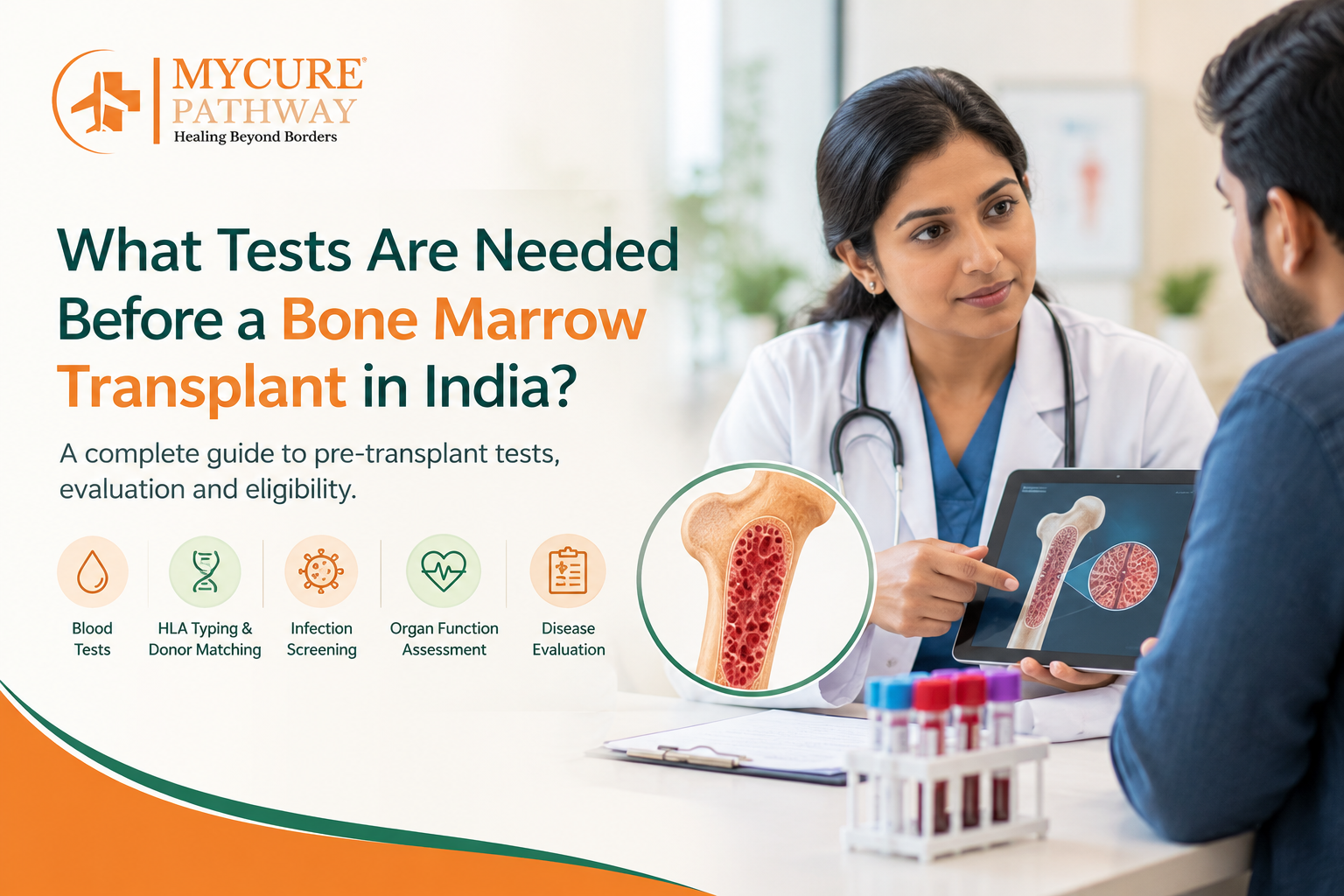
A bone marrow transplant is an important treatment option for certain blood cancers, bone marrow disorders, and immune system conditions. Before proceeding with the transplant, patients must undergo a series of medical tests to determine their suitability, assess their overall health, and identify potential complications. Understanding bone marrow transplant tests in India can help patients and their families prepare for the treatment journey with greater confidence.
Pre-transplant evaluation typically includes blood tests, organ function tests, infection screening, disease assessment, and donor compatibility testing. The exact tests depend on the patient’s diagnosis, age, general health, type of transplant, and the transplant centre’s protocol.
For international patients considering treatment in India, understanding these requirements in advance can also help with medical record preparation, consultation planning, and travel arrangements.
Why Are Tests Required Before a Bone Marrow Transplant?
A bone marrow transplant, also called a stem cell transplant, involves replacing damaged or diseased blood-forming cells with healthy stem cells. These cells may come from the patient or a suitable donor, depending on the medical condition and recommended treatment approach.
A thorough bone marrow transplant evaluation helps the medical team understand whether the patient can safely undergo the procedure and what precautions may be necessary.
The main objectives of pre-transplant testing include:
- Confirming the patient’s diagnosis and assessing the current stage or status of the disease.
- Evaluating heart, lung, kidney, and liver function.
- Checking for infections that could become serious during treatment.
- Determining compatibility between the patient and a potential donor.
- Assessing nutritional status and overall physical fitness.
- Identifying medical conditions that may require treatment before transplantation.
These investigations also help doctors plan conditioning therapy, which may involve chemotherapy and, in some cases, radiation before stem cell infusion.
1. Blood Tests Before a Bone Marrow Transplant
Blood investigations are among the first BMT pre-transplant tests recommended during the evaluation process. They provide information about blood cell counts, organ function, infection risks, and the patient’s general health.
Complete Blood Count (CBC)
A complete blood count measures red blood cells, white blood cells, haemoglobin, and platelets. It helps doctors assess existing blood abnormalities, monitor the underlying disease, and establish a baseline before treatment.
Blood Group and Antibody Screening
Blood group testing and antibody screening help the transplant team plan transfusion support when required. Although blood group compatibility is important for transfusion planning, it is not the same as HLA compatibility and does not by itself determine whether a donor is suitable.
Kidney and Liver Function Tests
Kidney function tests, including creatinine and estimated glomerular filtration rate (eGFR), help assess how well the kidneys are working. Liver function tests evaluate markers such as bilirubin, liver enzymes, and albumin.
These results help doctors select appropriate medicines, adjust treatment where necessary, and identify conditions that need attention before transplantation.
Electrolytes and Metabolic Profile
Tests for sodium, potassium, calcium, glucose, and other relevant metabolic markers help identify imbalances that may need correction before the transplant process begins.
Coagulation Profile
Tests such as PT/INR and aPTT may be performed to evaluate blood clotting, particularly when the patient has bleeding concerns, liver disease, or other relevant risk factors.
2. HLA Typing and Donor Compatibility Tests
For patients undergoing an allogeneic bone marrow transplant, in which stem cells come from another person, donor compatibility testing is a central part of the evaluation.
What Is HLA Typing?
Human leukocyte antigen (HLA) typing identifies specific immune-system markers that help the body distinguish its own cells from foreign cells. Doctors compare the patient’s HLA profile with that of potential donors to identify an appropriate match.
HLA testing may involve high-resolution DNA-based methods. The exact markers assessed depend on the transplant centre’s protocol and the type of donor being considered.
Who Can Be Tested as a Donor?
Potential donors may include siblings, other relatives, or unrelated volunteer donors. A parent, child, or other partially matched donor may also be considered in certain transplant settings.
A suitable HLA match can reduce some transplant-related risks, but donor selection involves more than matching results alone. The transplant team may also consider the donor’s age, health, availability, and other clinical factors.
Additional Donor Tests
Depending on the situation, donor evaluation may include:
- Confirmation of HLA typing.
- Blood group testing.
- Screening for transmissible infections.
- A medical history and physical examination.
- Additional tests to assess donor suitability and safety.
For autologous transplantation, where the patient’s own stem cells are used, testing and planning differ because a separate donor match is not generally required.
3. Infection Screening Before Stem Cell Transplantation
Infections can become particularly serious during transplantation because conditioning therapy may weaken the immune system. For this reason, infection screening is an essential part of the pre-transplant assessment in India.
Tests may include screening for:
- Hepatitis B and hepatitis C.
- Human immunodeficiency virus (HIV).
- Cytomegalovirus (CMV).
- Epstein–Barr virus (EBV).
- Other infections according to medical history, local protocols, and clinical risk.
Additional investigations may be recommended if the patient has symptoms, a history of previous infections, or findings that suggest an active infection.
For example, a patient with a fever, respiratory symptoms, or a history of tuberculosis may require further evaluation before proceeding. Depending on the clinical circumstances, this may involve cultures, molecular tests, imaging, or specialist consultation.
Not every patient requires every infection test. The transplant team determines the appropriate screening panel based on the patient’s condition and the centre’s protocols.
4. Heart Function Tests Before a Bone Marrow Transplant
Certain chemotherapy medicines used during transplant preparation can affect the heart. Evaluating cardiac health helps doctors understand whether the patient can tolerate the planned treatment.
Electrocardiogram (ECG)
An ECG records the electrical activity of the heart. It can help identify rhythm abnormalities and other findings that may need further evaluation.
Echocardiogram
An echocardiogram uses ultrasound to assess the heart’s structure and pumping function. Doctors may evaluate the left ventricular ejection fraction and other parameters to determine whether cardiac function is adequate for the proposed treatment.
Additional Cardiac Investigations
Depending on the patient’s medical history, symptoms, and initial results, the team may recommend additional investigations or a cardiology consultation.
These tests are especially relevant for patients with existing heart disease, previous exposure to certain chemotherapy drugs, or other cardiovascular risk factors.
5. Lung Function Tests and Respiratory Assessment
Lung function testing may be recommended to assess respiratory health before transplantation. This is important because some transplant-related treatments can affect the lungs, and respiratory complications may increase treatment risks.
Pulmonary Function Tests (PFTs)
PFTs measure how effectively the lungs move air and transfer oxygen. Common measurements include spirometry and diffusing capacity, when indicated.
Chest Imaging
A chest X-ray may be part of the initial evaluation. A CT scan or other imaging may be advised if symptoms, examination findings, or previous medical history warrant further investigation.
Patients with asthma, chronic lung disease, a history of smoking, or previous lung infections may need additional respiratory assessment.
The transplant team uses these results alongside other clinical information to plan treatment and identify precautions.
6. Bone Marrow Examination and Disease Assessment
The underlying disease plays a major role in determining whether a transplant is appropriate and when it should be performed. Doctors may need updated investigations to understand how well the disease is responding to previous treatment.
Depending on the diagnosis, these tests may include:
Bone Marrow Aspiration and Biopsy
A bone marrow aspiration collects a sample of the liquid portion of the marrow, while a biopsy obtains a small sample of marrow tissue. These procedures can help assess the presence and extent of certain blood disorders and cancers.
Flow Cytometry
Flow cytometry identifies and characterises cells based on specific markers. It may be used to evaluate conditions such as leukaemia, lymphoma, and other blood-related disorders.
Cytogenetic and Molecular Tests
Chromosome analysis and molecular testing can help identify genetic changes associated with a disease. These findings may influence risk assessment, treatment selection, and transplant timing.
Minimal or Measurable Residual Disease Testing
For selected conditions, minimal residual disease (MRD) testing may help detect very small amounts of remaining disease after treatment. The method used depends on the diagnosis and the clinical question.
Not all patients require a repeat bone marrow biopsy or the same disease-specific tests. The treating haematologist recommends the relevant investigations based on the condition being treated.
7. Dental Examination and Other Specialist Assessments
The pre-transplant evaluation may include assessments beyond laboratory tests and imaging. These help identify problems that could become more difficult to manage during immunosuppression.
A dental examination can identify tooth decay, gum disease, or oral infections that may require treatment before transplantation. Addressing these concerns can reduce the risk of complications during the period when immunity is low.
Other consultations may include:
- Nutrition assessment: Reviews weight, dietary intake, and nutritional deficiencies.
- Infectious disease consultation: Helps evaluate complex or persistent infections.
- Psychological assessment: Identifies emotional support needs and practical challenges.
- Fertility counselling: Discusses possible effects of treatment on fertility and available preservation options before therapy begins.
- General medical assessment: Reviews existing illnesses, medicines, allergies, and previous treatment complications.
The specific assessments depend on the patient’s age, diagnosis, planned treatment, and individual needs.
8. Kidney, Liver, and Other Organ Function Assessment
Although kidney and liver blood tests provide important information, doctors may require additional investigations when the results or medical history indicate a concern.
For example, a patient with known kidney disease may need a more detailed renal evaluation. Someone with previous liver disease may require additional blood tests, imaging, or specialist advice.
The team may also review previous chemotherapy exposure, medication use, and any history of serious reactions to treatment.
These assessments help doctors evaluate treatment tolerance and make decisions about conditioning therapy, medication dosing, supportive care, and monitoring.
9. What Tests Are Needed for Children Undergoing a Bone Marrow Transplant?
Children may require a similar core evaluation to adults, but the investigations and their interpretation are adapted to the child’s age, diagnosis, and developmental needs.
The medical team may assess:
- Complete blood count and organ function.
- Disease-specific investigations.
- HLA typing and donor compatibility, where applicable.
- Infection screening.
- Heart and lung function when indicated.
- Growth, nutrition, and developmental considerations.
- Family medical history and caregiver support.
Parents or guardians should bring previous reports, treatment summaries, imaging records, and medication details to the consultation. The transplant team will explain which additional tests are required and whether any investigations can be completed before travelling to India.
10. How Long Does Pre-Transplant Testing Take in India?
The time required to complete Bone Marrow Transplant Tests in India varies from patient to patient. Some routine blood investigations may be available relatively quickly, while specialised tests, donor searches, and disease assessments may take longer.
The overall timeline depends on several factors:
- The availability of previous medical records.
- Whether the diagnosis and disease status are already well documented.
- The need for repeat investigations.
- The availability of a suitable donor.
- The complexity of the patient’s medical condition.
- The transplant centre’s scheduling and testing protocols.
Patients should not assume that completing the initial tests means the transplant can begin immediately. Doctors must review the results, confirm the treatment plan, and ensure that the patient and donor, when applicable, are ready to proceed.
For international patients, sending available medical records to the treating hospital before travelling may help the team determine which preliminary assessments can be arranged in advance. However, the hospital may still require repeat tests or in-person evaluations.
11. What Is the Cost of Pre-Transplant Tests in India?
The cost of a pre-transplant evaluation depends on the number and type of investigations required. Routine blood tests generally differ in cost from specialised HLA typing, molecular studies, advanced imaging, or comprehensive cardiac and pulmonary assessments.
The total cost may also vary according to the hospital, laboratory, patient’s diagnosis, and whether donor investigations are included.
Before starting the evaluation, patients can ask the hospital for an itemised estimate covering:
- Initial consultation with a haematologist or transplant specialist.
- Routine laboratory investigations.
- HLA typing and donor-related tests, where applicable.
- Infection screening.
- Cardiac and respiratory investigations.
- Bone marrow examination or disease-specific tests.
- Additional specialist consultations.
An itemised estimate helps families understand which tests are included, which may be charged separately, and whether additional investigations could be required after the initial review. It is best to obtain a personalised estimate rather than rely on a single fixed price for every patient.
12. Documents to Prepare Before a Bone Marrow Transplant Evaluation in India
Patients can make their first consultation more productive by organising their medical records in advance.
Consider preparing the following documents:
- Previous blood reports and bone marrow examination results.
- Biopsy, pathology, flow cytometry, and molecular testing reports, where applicable.
- Details of previous chemotherapy, radiotherapy, or other treatments.
- Current medication list and known allergies.
- Previous hospital discharge summaries.
- Relevant imaging reports.
- Medical history, including major illnesses and infections.
- Available family medical history or potential donor information.
International patients should also ask the hospital whether reports need to be translated, provided in a particular format, or accompanied by pathology slides or tissue samples for review.
MyCurePathway can help international patients coordinate medical record sharing, specialist consultations, treatment planning, and travel-related arrangements for care in India. The treating hospital remains responsible for determining the required investigations and clinical suitability for transplantation.
Frequently Asked Questions
1. What are the most important tests before a bone marrow transplant?
Common investigations include a complete blood count, kidney and liver function tests, infection screening, cardiac and respiratory assessment where indicated, and disease-specific investigations. HLA typing is important for many allogeneic transplants. The exact test list depends on the patient’s condition and transplant type.
2. Is HLA typing compulsory for every bone marrow transplant patient?
HLA typing is central to donor selection for allogeneic transplantation. It is generally not required to identify a separate donor for an autologous transplant because the patient’s own stem cells are used. The transplant team will explain the testing required for the planned procedure.
3. Can pre-transplant tests be completed before travelling to India?
Some preliminary investigations may be completed in the patient’s home country, subject to the treating hospital’s approval. The transplant centre may request original reports, additional testing, repeat investigations, or samples for specialist review before confirming the treatment plan.
4. How long does the bone marrow transplant evaluation take?
There is no single timeline for every patient. Routine investigations may be completed relatively quickly, but specialised tests, donor identification, infection management, and further medical consultations can extend the evaluation period.
5. Do normal test results guarantee eligibility for a bone marrow transplant?
No. Normal results in selected investigations do not guarantee transplant eligibility or a successful outcome. Doctors consider the underlying diagnosis, disease status, organ function, infection risks, donor suitability, and overall clinical circumstances before making a recommendation.
Conclusion
A detailed pre-transplant evaluation is an essential step in planning a bone marrow transplant. From blood investigations and infection screening to organ function assessments, HLA typing, and disease-specific testing, each investigation helps the medical team make informed decisions about treatment and patient safety.
Understanding the Bone Marrow Transplant Tests in India before beginning the process can help patients and families organise medical records, plan consultations, and prepare for the next steps. The required tests and timeline will vary according to the diagnosis, transplant type, donor availability, and individual health needs.
For international patients exploring treatment options in India, MyCure Pathway can assist with coordinating medical records and specialist consultations so that the treating team can assess the case and advise on the appropriate next steps.