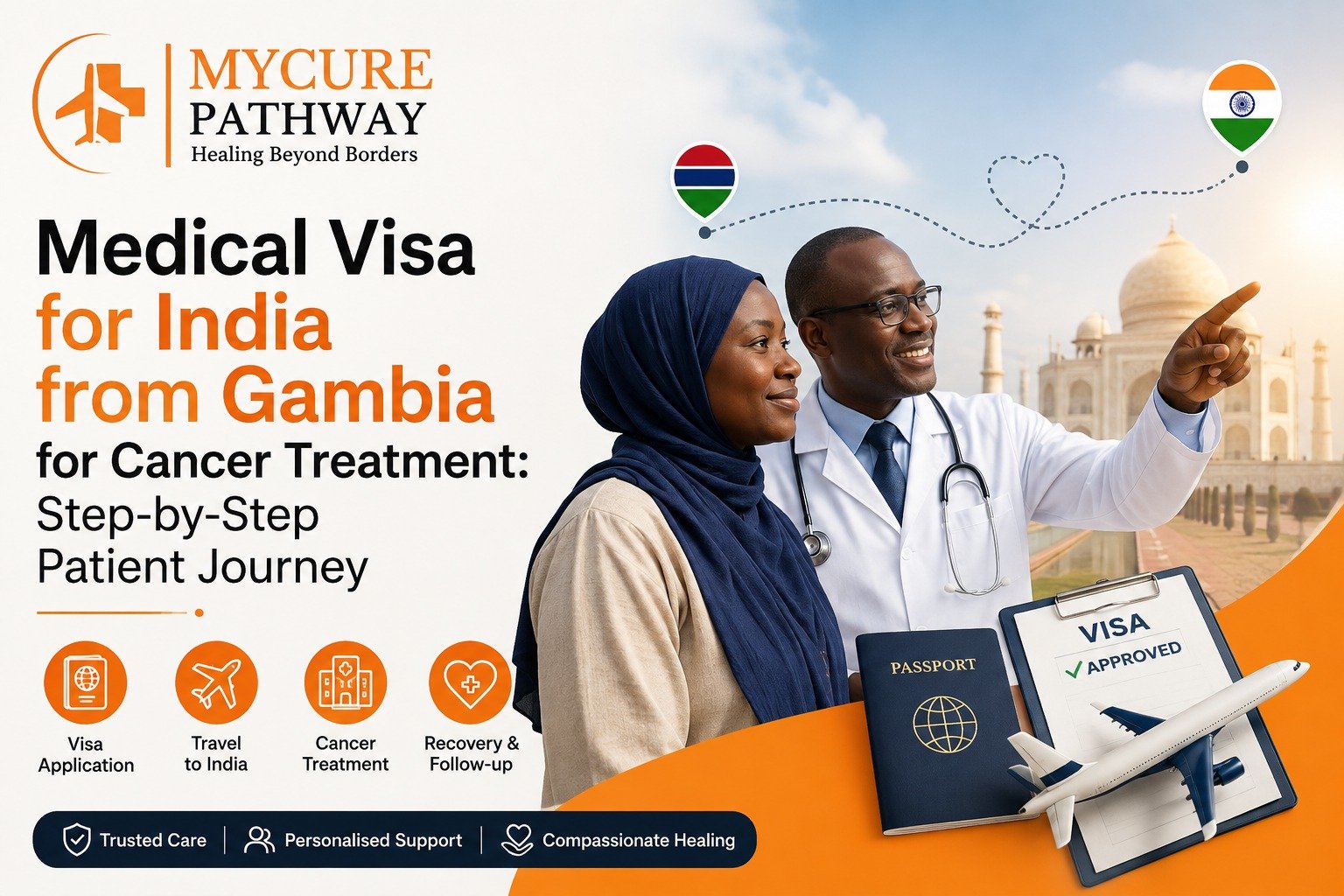
For patients in Gambia diagnosed with cancer, travelling to India for specialized treatment can provide access to experienced oncology specialists, advanced diagnostic facilities, multidisciplinary cancer teams, and comprehensive treatment options. But travelling internationally for cancer care requires careful preparation, particularly when it comes to hospital selection, medical records, visa documentation, travel planning, and follow-up care.
Obtaining a Medical Visa for India from Gambia is an important part of this process, but it is only one step in the complete medical journey. Patients also need to identify an appropriate cancer hospital, obtain medical advice, understand the proposed treatment, prepare the required documents, and plan their stay in India.
This guide explains the complete process for Gambian patients considering cancer treatment in India, from the initial medical consultation in Gambia to hospital treatment and returning home.
Why Are Gambian Patients Considering Cancer Treatment in India?
Cancer treatment requires specialized medical expertise and access to appropriate diagnostic and therapeutic facilities. Depending on the type and stage of cancer, a patient may need surgery, chemotherapy, radiation therapy, targeted treatment, immunotherapy, transplantation, or a combination of treatments.
India has developed a large healthcare ecosystem serving both domestic and international patients. Major healthcare centers have departments dedicated to medical oncology, surgical oncology, radiation oncology, hematology, and other cancer specialties.
For international patients, another important consideration is coordination. Cancer care can involve multiple consultations and investigations, so choosing a hospital that has experience handling overseas patients may make the overall journey easier.
Potential advantages of seeking treatment in India can include:
- Access to specialized oncology departments
- Multidisciplinary cancer care
- Advanced diagnostic facilities
- Experienced cancer specialists
- Surgical and non-surgical treatment options
- International patient departments
- Assistance with appointments and hospital coordination
- Availability of different treatment modalities
- Follow-up care planning
However, the best destination and treatment approach depend on the individual patient’s medical condition. Patients should obtain professional medical advice rather than selecting treatment based only on online information.
What Is a Medical Visa for India from Gambia?
A Medical Visa for India from Gambia is intended for eligible foreign nationals travelling to India to obtain medical treatment.
For cancer patients, the visa process generally involves demonstrating the medical purpose of the journey and providing relevant supporting documentation.
The exact requirements, application process, permitted stay, and other conditions can change. Therefore, applicants should always check the latest requirements through the official Indian visa authorities before applying.
A medical visa should not be treated as simply a travel document. It forms part of a larger medical travel plan involving the patient, hospital, treating specialists, and immigration authorities.
Who Should Consider a Medical Visa for Cancer Treatment in India?
Patients may explore medical treatment in India when they require specialized evaluation or treatment that is available through an appropriate Indian healthcare institution.
This may include patients seeking:
- Cancer diagnosis
- Second opinions
- Cancer surgery
- Chemotherapy
- Radiation therapy
- Immunotherapy
- Targeted therapies
- Pediatric oncology
- Blood cancer treatment
- Bone marrow transplantation
- Complex cancer surgery
- Follow-up oncology consultations
The first step should always be medical evaluation.
A patient should ideally share their available medical records with the prospective hospital before travelling. This allows the medical team to understand the diagnosis and determine what additional information may be required.
Step-by-Step Medical Journey From Gambia to India
The process can seem complicated when viewed as one large task. Breaking it into stages makes it easier.
Step 1: Understand the Diagnosis
Before planning international treatment, the patient should understand the basic details of their diagnosis.
Important information may include:
- Type of cancer
- Cancer stage
- Location of the tumor
- Biopsy findings
- Pathology results
- Previous treatments
- Current medications
- Relevant medical conditions
Patients should ask their treating doctor for copies of important reports.
Step 2: Collect Complete Medical Records
Medical records are extremely important when seeking an oncology opinion abroad.
Patients should try to collect:
- Biopsy reports
- Histopathology reports
- Immunohistochemistry reports
- CT scan reports
- MRI reports
- PET-CT reports
- Blood investigations
- Previous discharge summaries
- Operation reports
- Chemotherapy records
- Radiation records
- Current prescriptions
- Previous oncology consultations
If possible, keep both physical and digital copies.
Incomplete records can make it more difficult for a new medical team to understand the patient’s treatment history.
Step 3: Search for the Right Cancer Hospital in India
Finding a Cancer hospital in India is not simply about selecting the most famous hospital.
The more important question is:
Does this hospital have the right expertise and facilities for my particular cancer?
For example, someone with breast cancer may benefit from a center with dedicated breast oncology services, while a patient with leukemia may require a specialized hematology and bone marrow transplant program.
When comparing cancer hospitals for international patients, consider:
Oncology expertise
Does the hospital have specialists experienced in the patient’s particular cancer?
Multidisciplinary care
Can medical oncologists, surgical oncologists, radiation oncologists, radiologists, pathologists, and other specialists collaborate when necessary?
Diagnostic facilities
Does the hospital provide the investigations needed to confirm or reassess the diagnosis?
Treatment facilities
Check whether the hospital offers the treatment modalities that may be required.
International patient support
A dedicated international patient department can help overseas patients navigate appointments, communication, admission, accommodation, and other practical matters.
Step 4: Request a Medical Opinion
Once a suitable hospital has been identified, the patient’s medical records can be submitted for review according to the hospital’s process.
The specialist may evaluate:
- Diagnosis
- Cancer stage
- Previous treatment
- Pathology
- Imaging
- Current health status
The medical team may then provide an initial opinion regarding possible next steps.
An online opinion should not be considered a substitute for an in-person examination when physical assessment or additional testing is necessary.
Step 5: Understand the Proposed Treatment
Before travelling, patients should try to understand what may happen after arrival.
Questions to ask include:
- Will my existing reports be accepted?
- Will the pathology need to be reviewed?
- Will additional scans be required?
- How many consultations may be necessary?
- Could surgery be required?
- Could chemotherapy be required?
- Could radiation therapy be recommended?
- How long might treatment take?
- Will hospitalization be necessary?
- What follow-up may be required?
The final treatment plan is usually determined after the patient’s medical evaluation and necessary investigations in India.
Step 6: Obtain Hospital Documentation
After selecting the hospital and arranging the medical consultation or treatment, the patient may need hospital-related documentation for the visa process.
The exact documentation depends on the current visa requirements and the hospital’s procedures.
Applicants should ensure that:
- Name spellings match the passport
- Passport details are accurate
- Dates are consistent
- Medical information is authentic
- Supporting documents are complete
Even small inconsistencies can create unnecessary complications during document processing.
Step 7: Prepare Medical Visa Documents
Preparing medical visa documents should be treated as a separate checklist rather than something done at the last minute.
Depending on the current requirements, applicants may need documents such as:
- Valid passport
- Visa application
- Recent photographs where applicable
- Hospital documentation
- Medical reports
- Treatment-related correspondence
- Financial/supporting documents where required
- Travel-related information where required
- Additional documents requested by authorities
Visa requirements can change, so applicants should verify the current rules before submission.
Step 8: Apply for the Medical Visa
Once the required documents have been prepared, applicants should submit their application through the applicable official Indian visa process.
Before submission, carefully check:
- Passport details
- Personal information
- Hospital details
- Treatment purpose
- Supporting documents
- Photograph requirements
- Application fee
- Appointment or submission requirements
Do not rely on outdated visa information from old websites or social media posts.
Step 9: Plan Your Travel to India
After the visa process is completed, the patient can prepare for the journey.
Create a travel folder containing:
Medical documents
- Diagnosis reports
- Pathology reports
- Imaging reports
- Prescriptions
- Previous treatment summaries
Travel documents
- Passport
- Medical visa
- Flight details
- Accommodation details
- Hospital contact information
Emergency information
- Family contact
- Hospital contact
- Local emergency contacts
- Insurance information, if applicable
Keeping these documents accessible during travel is preferable to placing everything in checked luggage.
What Happens After Reaching India?
The first hospital visit may involve registration, document verification, consultation, and medical evaluation.
The oncologist may review the patient’s previous reports and determine whether additional investigations are necessary.
These may include:
- Blood tests
- CT scans
- MRI
- PET-CT
- Biopsy
- Pathology review
- Molecular testing
- Other specialized investigations
The purpose is to ensure that the treatment plan is based on an accurate understanding of the patient’s condition.
How Is Cancer Treatment Decided in India?
Cancer treatment is not identical for every patient.
The treatment plan may depend on:
- Cancer type
- Stage
- Tumor location
- Pathology
- Molecular characteristics
- Previous treatment
- Age
- General health
- Response to earlier treatment
Depending on these factors, doctors may recommend one or more treatment approaches.
Surgery
Surgical oncology may be recommended when removing a tumor or affected tissue is medically appropriate.
Chemotherapy
Chemotherapy uses anti-cancer medicines as part of treatment for certain cancers.
Radiation Therapy
Radiation therapy uses high-energy radiation to target cancer cells and may be used before or after surgery or as part of other treatment plans.
Immunotherapy
For certain cancers, immunotherapy may be considered based on the patient’s diagnosis and relevant medical characteristics.
Targeted Treatment
Some cancers have specific molecular characteristics that may make targeted therapies an option.
Stem Cell or Bone Marrow Transplantation
For selected blood cancers and other conditions, transplantation may be considered by specialized teams.
The appropriate treatment must always be determined by qualified cancer specialists.
How Long Should a Gambian Patient Stay in India?
There is no universal answer.
A patient travelling for a second opinion may need significantly less time than someone undergoing surgery, chemotherapy, radiation therapy, or a complex combination of treatments.
The length of stay can depend on:
- Initial consultation
- Diagnostic investigations
- Treatment type
- Surgery
- Recovery
- Chemotherapy cycles
- Radiation schedule
- Complications
- Follow-up consultations
Patients should discuss an estimated timeline with their hospital before finalizing accommodation and return travel.
It is also sensible to plan for unexpected extensions.
Medical Visa vs Cancer Treatment Planning
One common mistake is to focus exclusively on the visa.
A successful medical journey requires coordination between several elements:
Medical evaluation → Hospital selection → Treatment planning → Hospital documentation → Visa application → Travel → Treatment → Follow-up
If one stage is poorly planned, it can affect the others.
For example, booking a short trip when the treatment may require several weeks could create unnecessary pressure.
How Much Does Cancer Treatment in India Cost?
There is no single price for cancer treatment.
The cost may vary depending on:
- Type of cancer
- Stage
- Hospital
- Specialist
- Diagnostic tests
- Surgery
- Hospitalization
- Chemotherapy
- Radiation therapy
- Other treatments
- Medications
- Follow-up requirements
International patients should request a patient-specific estimate rather than relying on a generic figure.
It is also important to account for non-medical expenses such as:
- Visa costs
- Airfare
- Accommodation
- Food
- Local transportation
- Attendant expenses
- Extended stay
A realistic budget should include both medical and travel-related expenses.
What Should Patients Ask a Cancer Hospital Before Travelling?
Before confirming arrangements, ask the hospital:
- Does the hospital treat my specific cancer?
- Which oncology department should I consult?
- Can my existing pathology reports be reviewed?
- Will additional tests be necessary?
- What treatment options may be considered?
- Is hospitalization likely?
- How long could the treatment take?
- What is the estimated medical cost?
- Is an international patient department available?
- How will follow-up be managed after returning to Gambia?
Getting answers before departure can make the journey more organized.
Cancer Hospitals for International Patients: What Makes Them Different?
International patients may have additional logistical needs compared with local patients.
A hospital experienced in international healthcare may provide services such as:
- International patient coordinators
- Appointment coordination
- Airport assistance
- Language assistance
- Accommodation guidance
- Billing assistance
- Medical documentation support
- Follow-up coordination
These services do not replace medical expertise, but they can make the administrative side of treatment easier.
Can a Family Member Travel With the Patient?
Cancer treatment can require significant emotional and practical support.
Eligible attendants may be able to accompany medical visa patients under the applicable Indian visa rules.
Before travelling, the patient and accompanying family member should independently verify:
- Appropriate visa category
- Application requirements
- Permitted duration
- Required supporting documents
The attendant should also maintain copies of essential patient and hospital documents.
What Should You Do Before Returning to Gambia?
Before leaving India, ask the hospital for a complete treatment summary.
This may include:
- Final diagnosis
- Treatment performed
- Surgery details
- Medication information
- Pathology reports
- Imaging reports
- Discharge summary
- Follow-up recommendations
- Future treatment plan
If additional treatment is expected after returning to Gambia, make sure the patient’s local healthcare provider receives the relevant information.
Common Mistakes Gambian Patients Should Avoid
Choosing a hospital only because it is popular
A famous hospital may not necessarily be the most appropriate option for every cancer.
Travelling without complete reports
Medical records can significantly help doctors understand previous treatment.
Applying for a visa at the last minute
Allow sufficient time to prepare and verify documentation.
Making treatment decisions based only on cost
The cheapest option should not automatically be considered the best option. Medical expertise, treatment facilities, safety, and continuity of care matter.
Booking a return flight too early
Cancer treatment schedules can change.
Ignoring follow-up care
Patients should know how their treatment will continue after returning home.
Complete Pre-Travel Checklist
Before leaving Gambia for cancer treatment in India, review the following:
- Passport is valid
- Appropriate medical visa obtained
- Hospital selected
- Hospital appointment confirmed
- Medical records organized
- Pathology reports available
- Imaging reports available
- Medication list prepared
- Travel arrangements confirmed
- Accommodation arranged
- Hospital contact saved
- Emergency contacts saved
- Medical and travel budget prepared
- Digital copies of documents stored securely
- Follow-up requirements discussed
Frequently Asked Questions
What is the Medical Visa for India from Gambia?
It is the applicable Indian visa category for eligible Gambian nationals travelling to India for medical treatment. Patients should verify current eligibility and requirements through official Indian visa authorities.
Can I get a Medical Visa for India from Gambia for cancer treatment?
Eligible patients seeking cancer treatment in India may apply under the applicable medical visa framework, subject to current Indian visa requirements and supporting documentation.
What medical visa documents are needed for cancer treatment?
The exact list can vary. Applicants may need a valid passport, visa application, photographs where applicable, hospital documentation, medical records, and other supporting documents required by the authorities.
How can I find a Cancer hospital in India?
Compare hospitals based on their expertise in treating your specific cancer, oncology departments, diagnostic and treatment facilities, specialist experience, and international patient services.
Is a medical visa for cancer treatment available for accompanying family members?
Applicable visa provisions may allow eligible attendants to accompany medical patients. The patient and attendant should verify the latest rules and required documentation before travelling.
How long does Cancer Treatment India take?
Treatment duration varies significantly depending on the diagnosis and treatment plan. Some patients may need only a consultation, while others may require weeks or longer for comprehensive treatment.
Conclusion
For Gambian patients considering cancer treatment abroad, India can be an important option for accessing specialized oncology services. However, the journey requires much more than booking a flight.
From collecting medical reports and identifying an appropriate Cancer hospital in India to preparing medical visa documents, arranging hospital appointments, and planning post-treatment follow-up, every stage should be carefully organized.
The Medical Visa for India from Gambia is a key part of this process, but patients should also prioritize selecting an appropriate medical team and understanding their proposed treatment.
If you are exploring India medical visa for cancer treatment, start by organizing your medical records and identifying hospitals experienced in your specific type of cancer. Verify current visa requirements through official Indian authorities, and discuss treatment decisions directly with qualified oncology professionals.
MyCure Pathway can help international patients understand the hospital-selection and medical-travel process, coordinate their healthcare journey, and connect their medical requirements with suitable treatment options in India.