Neurological disorders such as Parkinson’s disease, essential tremor, dystonia, and certain movement disorders can significantly affect a person’s quality of life. As healthcare technology advances globally, more patients in Africa are seeking innovative treatment options that offer long-term symptom management and improved independence. One such breakthrough treatment is Deep Brain Stimulation in Ghana, a procedure that has gained international recognition for helping patients with movement-related neurological conditions.
Many patients and families in Ghana wonder whether Deep Brain Stimulation (DBS) is available locally and what options exist for accessing this advanced treatment. Understanding how DBS works, who qualifies for the procedure, the benefits and risks involved, and whether patients may need to travel abroad for treatment is essential before making healthcare decisions.
This comprehensive guide explains, from the MyCure Pathway, everything patients need to know about Deep Brain Stimulation in Ghana, including treatment availability, costs, benefits, eligibility criteria, and alternative options for receiving specialized neurological care.
What Is Deep Brain Stimulation?
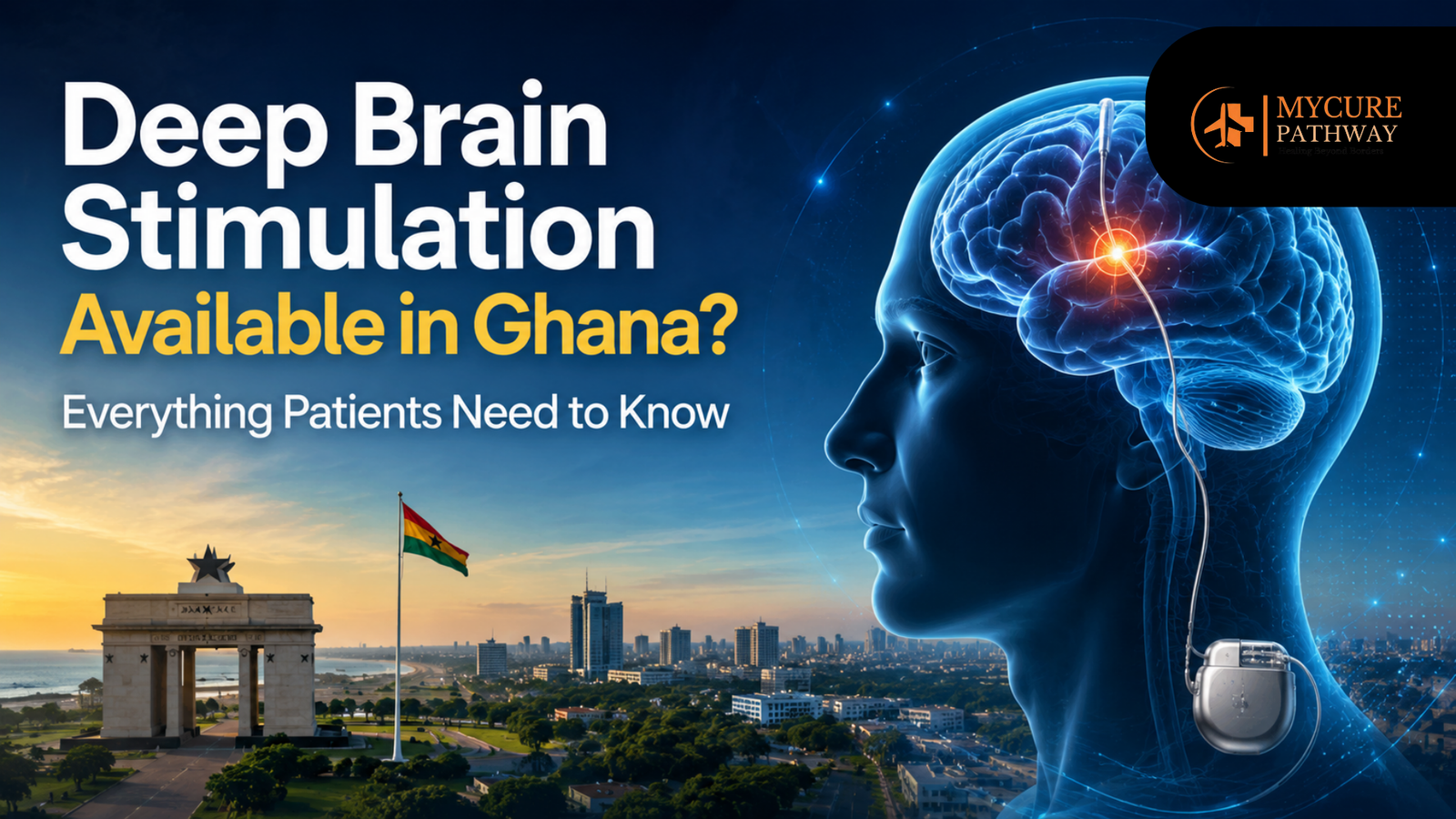
Deep Brain Stimulation (DBS) is a highly specialized neurosurgical procedure used to treat certain neurological disorders. The treatment involves implanting thin electrodes into specific areas of the brain responsible for controlling movement. These electrodes are connected to a small battery-powered device called a neurostimulator, which is implanted under the skin near the chest.
The neurostimulator sends electrical impulses to targeted brain regions, helping regulate abnormal brain activity and reduce symptoms associated with movement disorders.
Unlike destructive brain surgeries, DBS is adjustable and reversible, making it one of the most preferred treatment options for suitable neurological patients worldwide.
How Does Deep Brain Stimulation Work?
The human brain communicates through electrical signals. In neurological disorders such as Parkinson’s disease, these signals become disrupted, leading to symptoms like:
- Tremors
- Muscle stiffness
- Slow movement
- Balance difficulties
- Involuntary movements
During brain stimulation therapy, implanted electrodes deliver controlled electrical pulses to affected brain regions. These impulses help normalize abnormal brain activity and improve motor function.
The stimulation settings can be adjusted over time according to the patient’s symptoms and treatment response.
Conditions Treated with Deep Brain Stimulation
DBS is most commonly recommended for patients suffering from:
Parkinson’s Disease
One of the primary reasons patients seek Parkinson’s treatment in Ghana is the progressive nature of the disease. DBS can significantly reduce:
- Tremors
- Rigidity
- Slowness of movement
- Medication-related complications
Essential Tremor
Essential tremor causes uncontrollable shaking, often affecting the hands, head, or voice. DBS can dramatically reduce tremor severity when medications fail.
Dystonia
Dystonia causes involuntary muscle contractions and abnormal postures. DBS may improve muscle control and reduce painful spasms.
Epilepsy
In some cases, DBS is used for patients with drug-resistant epilepsy who do not respond adequately to medication.
Obsessive-Compulsive Disorder (OCD)
Certain severe psychiatric conditions may also benefit from DBS when conventional therapies are unsuccessful.
Is Deep Brain Stimulation Available in Ghana?
The availability of Deep Brain Stimulation in Ghana remains limited compared to developed healthcare systems in Europe, North America, and parts of Asia.
While Ghana has made significant progress in neurology and neurosurgery services, DBS requires:
- Advanced neurosurgical infrastructure
- Specialized imaging equipment
- Functional neurosurgeons
- Neurophysiologists
- Long-term programming and follow-up support
Currently, only a limited number of healthcare facilities in West Africa possess the complete infrastructure required for comprehensive DBS programs.
As a result, many Ghanaian patients often travel abroad to countries with well-established DBS centers for treatment.
Why Do Ghanaian Patients Seek DBS Treatment Abroad?
Several factors influence medical travel for neurological treatment:
Access to Specialized Expertise
DBS procedures require highly experienced functional neurosurgeons who perform these surgeries regularly.
Advanced Technology
Leading international hospitals use:
- High-resolution MRI guidance
- Intraoperative brain mapping
- Robotic surgical assistance
- Advanced neurostimulator systems
Multidisciplinary Care
Successful DBS treatment requires collaboration among:
- Neurologists
- Neurosurgeons
- Neuropsychologists
- Rehabilitation specialists
- DBS programming experts
Comprehensive Follow-Up
Long-term device programming and monitoring are essential for achieving optimal results.
Countries Commonly Chosen by Ghanaian Patients
Many patients seeking neurological treatment in Ghana often consider medical travel destinations such as:
India
India has become one of the leading destinations for DBS due to:
- Highly experienced neurosurgeons
- Advanced medical technology
- International patient support services
- Cost-effective treatment packages
Turkey
Turkey offers modern neurosurgical facilities and internationally accredited hospitals.
Germany
Germany is renowned for advanced neurological care and DBS expertise.
United Kingdom
The UK provides specialized movement disorder centers and extensive DBS experience.
United States
Many pioneering DBS programs are located in the United States, although treatment costs are generally higher.
Who Is a Candidate for Deep Brain Stimulation?
Not every neurological patient is suitable for DBS.
Ideal candidates generally include individuals who:
- Have Parkinson’s disease with medication-related complications
- Experience severe tremors despite medication
- Have dystonia affecting daily life
- Continue experiencing disabling symptoms despite optimal medical treatment
Candidates typically undergo comprehensive evaluations before approval.
Who May Not Be Suitable?
DBS may not be recommended for patients with:
- Severe dementia
- Uncontrolled psychiatric disorders
- Serious medical conditions increase surgical risk
- Inability to attend regular follow-up appointments
A thorough neurological assessment helps determine suitability.
Pre-Surgical Evaluation Process
Before surgery, patients undergo multiple assessments, including:
Neurological Examination
Doctors evaluate symptom severity and medication response.
Brain Imaging
MRI and CT scans help identify target brain regions.
Neuropsychological Testing
Mental and cognitive function assessments ensure patients can safely undergo treatment.
Medical Evaluation
Overall health status is reviewed to minimize surgical risks.
How Is DBS Surgery Performed?
The procedure is usually completed in two stages.
Stage One: Electrode Placement
Neurosurgeons place thin electrodes into specific brain targets using advanced imaging guidance.
Stage Two: Neurostimulator Implantation
A pulse generator is implanted beneath the skin near the chest and connected to the electrodes.
After surgery, stimulation settings are gradually adjusted to achieve the best symptom control.
Benefits of Deep Brain Stimulation
For appropriate candidates, DBS can provide life-changing improvements.
Reduced Tremors
Many patients experience substantial tremor reduction.
Improved Mobility
Movement becomes smoother and more coordinated.
Better Quality of Life
Patients often regain independence in daily activities.
Reduced Medication Dependence
Many individuals can decrease medication doses after successful DBS.
Adjustable Therapy
Unlike irreversible surgeries, DBS settings can be modified as symptoms change.
Long-Term Symptom Management
DBS can provide symptom relief for many years.
Risks and Potential Complications
Like any surgical procedure, DBS carries risks.
Possible complications include:
Surgical Risks
- Bleeding
- Infection
- Stroke
- Anesthesia-related complications
Device-Related Problems
- Lead displacement
- Hardware malfunction
- Battery depletion
Neurological Side Effects
Some patients may experience:
- Speech difficulties
- Balance issues
- Mood changes
- Temporary cognitive effects
Most complications are manageable with proper medical supervision.
Recovery After DBS Surgery
Recovery varies between individuals.
Most patients:
- Stay in the hospital for several days
- Resume light activities within a few weeks
- Begin stimulation programming after healing
Symptom improvements may occur gradually as device settings are optimized.
Life After Deep Brain Stimulation
DBS is not a cure for neurological diseases.
However, many patients experience:
- Greater independence
- Improved motor function
- Enhanced confidence
- Better social engagement
- Increased ability to perform daily tasks
Ongoing follow-up appointments remain essential for maintaining treatment effectiveness.
Cost of Deep Brain Stimulation for Ghanaian Patients
The total cost of DBS depends on several factors:
- Hospital charges
- Surgeon expertise
- Neurostimulator type
- Diagnostic testing
- Post-operative programming
- Follow-up care
Patients traveling abroad should also consider:
- Travel expenses
- Accommodation costs
- Visa requirements
- Companion expenses
Obtaining a detailed treatment estimate before planning medical travel is highly recommended.
Importance of Choosing the Right Hospital
Selecting an experienced DBS center can significantly influence treatment outcomes.
Patients should evaluate:
Neurosurgeon Experience
Ask how many DBS procedures are performed annually.
Hospital Accreditation
International accreditation reflects adherence to quality standards.
Multidisciplinary Team Availability
Comprehensive care improves outcomes.
Follow-Up Support
Long-term programming and monitoring are crucial for success.
International Patient Services
Dedicated coordinators can simplify travel and treatment logistics.
Questions Patients Should Ask Before DBS
Before making a decision, consider asking:
- Am I a suitable DBS candidate?
- What benefits can I realistically expect?
- What risks are involved?
- How many DBS procedures has the surgeon performed?
- What type of neurostimulator will be used?
- What follow-up care is required?
- How often will device programming be needed?
These questions help patients make informed treatment decisions.
Future of Deep Brain Stimulation in Ghana
As healthcare infrastructure continues to improve, the future of DBS treatment in Ghana appears promising.
Growing investments in:
- Neurosurgery training
- Advanced imaging technology
- Specialized neurological centers
- International healthcare collaborations
May eventually increase local access to Deep Brain Stimulation procedures.
Until then, many patients continue to explore international treatment options for advanced neurological care.
Conclusion
Deep Brain Stimulation in Ghana represents a growing area of interest for patients seeking advanced solutions for neurological disorders such as Parkinson’s disease, essential tremor, and dystonia. Although access to fully established DBS programs remains limited within the country, patients can explore treatment opportunities through internationally recognized neurosurgical centers that specialize in movement disorder management.
As one of the most effective forms of brain stimulation therapy available today, DBS offers significant benefits for carefully selected patients, including improved mobility, reduced tremors, enhanced independence, and a better overall quality of life. The procedure’s adjustable and reversible nature makes it a preferred option for many individuals whose symptoms are no longer adequately controlled by medication alone.
For those considering DBS treatment options in Ghana, early consultation with a qualified neurologist or movement disorder specialist is essential. With proper evaluation, expert surgical care, and ongoing follow-up support, Deep Brain Stimulation can help patients regain control over their lives and achieve meaningful long-term symptom management.
Ultimately, as neurological care continues to evolve, the future of advanced neurological treatment Ghana services looks increasingly promising, bringing hope to thousands of patients and families affected by complex neurological conditions.
Frequently Asked Questions (FAQs)
Is Deep Brain Stimulation available in Ghana?
While neurological and neurosurgical services continue to expand in Ghana, comprehensive DBS programs remain limited. Many patients currently seek treatment at specialized international centers.
What conditions can DBS treat?
DBS is commonly used for Parkinson’s disease, essential tremor, dystonia, epilepsy, and certain treatment-resistant neurological and psychiatric disorders.
Is DBS a cure for Parkinson’s disease?
No. DBS does not cure Parkinson’s disease but can significantly reduce symptoms and improve quality of life.
How long does a DBS device last?
Battery life depends on the device type and stimulation settings. Some systems last several years before replacement is needed.
Is DBS safe?
When performed by experienced specialists, DBS is generally considered safe and effective. However, as with any surgery, risks and complications can occur.
Can DBS reduce medication use?
Many patients, particularly those with Parkinson’s disease, can reduce medication doses after successful DBS treatment.