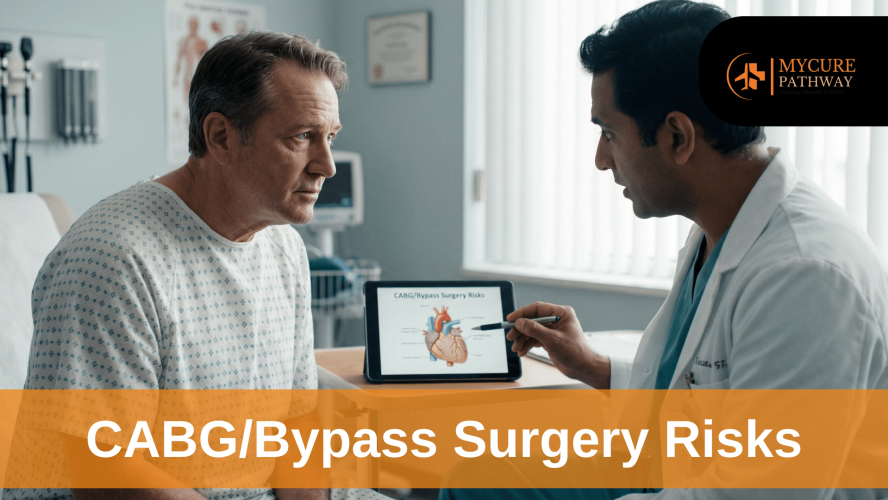
Cardiovascular diseases are still one of the major health emergencies globally, and surgical treatment is usually necessary when the coronary blood vessels are severely obstructed. CABG / Bypass Surgery is a life-saving, decades-old procedure that helps properly circulate blood to the heart muscle. Most importantly, no matter how successful these intervention approaches seem at first glance, patients and families need to be aware that they entail the same risks and potential complications as any other major cardiac operation.
At Mycurepathway, patient education is a key aspect of treatment planning. Knowing what to expect before and after surgery empowers patients to make informed decisions and begin the recovery process with confidence.
Understanding CABG / Bypass Surgery and Its Purpose
CABG / Bypass Surgery – A new path for the blood that flows around a clogged coronary arterial segment is created. During heart bypass surgery, surgeons use healthy blood vessels taken from parts of the body, such as the chest, arm, or leg, to bypass a clogged vessel and improve oxygen supply to the body. This procedure is performed when blockages are widespread or when prior treatments have been ineffective.
The purpose of surgery is to lessen chest pain, enhance the heart’s pumping action, and minimise the risk of a heart attack. Although most recover fully, being aware of potential complications may help users both physically and psychologically.
Common Risks of Bypass Surgery
Each patient considered for CABG/Bypass surgery has an individual risk profile based on age, general condition, and medical history. One common risk is bleeding after or during the surgery. This complication is kept to a minimum by careful surgical procedures and meticulous intensive care observation in the early postoperative period.
This can be an infection at the surgical site or at the site where the graft vessels are taken. Hospitals manage this risk through sterile procedures, antibiotic protocols, and patient education on wound care following discharge. Early detection is crucial for preventing infection-related complications.
Heart Rhythm Changes After CABG
Irregular heartbeats, mainly Atrial Fibrillation, are quite common after CABG / Bypass Surgery. These rhythm changes usually occur in the first several days after surgery and are transient. To prevent this, doctors manage them with medications that regulate heart rhythm and control heart rate.
Continuous monitoring in these patients enables medical teams to react rapidly. Most patients return to a normal rhythm within weeks as the heart heals.
Stroke and Neurological Complications
Stroke, although uncommon, is one of the most severe risks associated with CABG/Bypass Surgery. It can result from blood clots or decreased blood flow to the brain, both of which can be caused by surgery. In order to avoid this danger, the operating surgeons examine vessels very closely- and even during surgery employ the most modern methods of monitoring.
After surgery, a neurological evaluation is performed routinely. Early treatment can make a big difference in outcomes if something neurologically is found.
Lung and Breathing Complications
Temporary breathing problems may occur in some patients after CABG/Bypass Surgery, particularly those with pre-existing lung disease or who have been smokers. Lung function may be affected by general anesthesia and immobility during the recovery period.
Respiratory therapy, breathing exercises, and early mobilization are among the major treatment options to help prevent complications such as pneumonia. Patients are instructed to continue breathing exercises postoperatively.
Kidney Function Changes After Surgery
Temporary changes in kidney function sometimes occur after CABG / Bypass Surgery, especially in diabetic patients and those with existing kidney diseases. It’s believed to be caused by alterations in blood flow during surgery and by the body’s reaction to an anesthetic.
Doctors track fluid balance and kidney function with blood tests. In general, kidney function will stabilize with supportive care and hydration.
Managing Pain and Surgical Discomfort
Pain after bypass surgery / CABG is usual but moderate. It types from the incision and graft harvest sites in the chest. Pain-relief drugs are initially prescribed, with dosages being slowly diminished while healing is taking place.
Effective pain management is significant because it enables patients to breathe deeply, move safely, and participate in rehabilitation without unnecessary stress.
Recovery Challenges and How They Are Addressed
Patients can face bypass surgery recovery issues involving weariness, mood swings, or sleep disruption. These are common problems that typically go away. Cardiac rehabilitation programs play a significant role in facilitating physical activity, emotional adaptation, and lifestyle modification among patients.
Encouragement from the healthcare team and family members is also beneficial for boosting the patient’s strength and confidence during the recovery period.
Surgical Expertise and Procedure Safety
The safety of CABG surgery depends heavily on the surgical approach and hospital facilities. Surgeons follow standardized protocols during the bypass surgery procedure to reduce complications and ensure precise graft placement.
State-of-the-art imaging, monitoring equipment, and interdisciplinary case team approaches have improved surgical outcomes and recovery by enabling shorter incisions.
Long-Term Risk Management After CABG / Bypass Surgery
For long-term results after Bypass Surgery, lifestyle changes and medical follow-up are important. Patients are encouraged to control their blood pressure, cholesterol, and blood sugar levels. Regular tests can monitor medical conditions promptly and prevent future heart attacks.
Healthy lifestyle practices improve the benefits of surgery and help recovery last longer.
Why Guided Care Matters With Mycurepathway
Mycurepathway provides patients with support at every step of their treatment, from understanding the risks of surgery to managing recovery. The platform bridges the gap between patients and seasoned cardiac doctors, as well as established care plans, reducing uncertainty and enhancing patient outcomes.
Education, coordination, and aftercare to keep patients informed and supported. Alongside education from the initial moment of care, patients benefit from provider continuity and monitoring throughout their journey.
Conclusion
Patients who have a full grasp of the risks and how to manage CABG/Bypass Surgery will make the procedure more approachable. Although there are potential complications associated with the anatomy and environment, improvements in surgical technique, post-operative care, and rehabilitation have rendered results more predictable and successful.
With support and direction from Mycurepathway, patients receive the information and coordination needed to successfully manage recovery and continue improving their heart health.
FAQs
Is CABG/ Bypass Surgery an example of a high risk?
CABG / Bypass Surgery is a significantly invasive procedure familiarized by virtually all professionals. Men’s health risks are influenced by individual factors, such as age and pre-existing conditions. Careful evaluation helps minimize complications.
What is the typical recovery time following surgery?
You will feel better for the first several weeks after surgery and feel stronger and have more energy. Full recovery can be achieved within some months, depending on general health and the discipline with which rehabilitation programs are carried out.
Are complications after surgery permanent?
Most complications are transient and resolve with proper medical treatment. Early diagnosis and monitoring are of great value for recovery.
Can lifestyle changes reduce future heart risks?
Yes, a healthy diet, sufficient exercise, and adherence to medication are also important for long-term heart protection after surgery.
Is cardiac rehab important after bypass surgery?
It is highly recommended to undergo cardiac rehabilitation, as it supports physical and emotional recovery and, in the long run, heart health.